REVIEW · POSITANO
Transfer from Naples to Positano with 2 hours Private Tour in Herculaneum
Book on Viator →Operated by Askos Tours · Bookable on Viator
Two Roman stops, zero travel hassle. I love the combo of a guided Herculaneum visit and a door-to-door private transfer from Naples, because you save hours that would otherwise vanish on trains and buses. I also like that the driver stays with your bags, so your hands stay free while you explore. The only real consideration: at $456.70 per person, you’re paying for convenience and privacy, not budget transport.
This is a smart “do two things in one trip” option when you’re headed to the Amalfi Coast. The whole experience runs about 4 hours, with a guided Roman-ruins stop inside Herculaneum and then drop-off in Positano. If you want to stretch your time in Positano later, just remember there are no meals included.
In This Review
- Key things that make this transfer work
- Door-to-door Naples to Positano, minus the stress
- Why Herculaneum fits perfectly into a transfer day
- The Herculaneum route: what you’ll see at each stop
- Parco Acheologico di Ercolano (start at the ticket office)
- Casa dei Cervi (the Deer House)
- La Terrazza di M. Nonio Balbo (a patron’s story in stone)
- College of the Augustales
- Casa del Rilievo di Telefo (and its unusual private access)
- Partem Domus lignea – Casa del Tramezzo di Legno (the wooden partition)
- House of the Skeleton (named from discoveries)
- Central Thermae (men and women had separate entrances)
- Casa del Salone Nero (the Black Hall luxury)
- Casa Sannitica (Samnite-style atrium with frescoes)
- Casa del Bel Cortile (courtyard instead of an atrium)
- House of the Grand Portal (frescoes, colonnati, charred wooden remains)
- Meet your guide (and why the guidance matters)
- What the “driver stays with the vehicle” really means for your day
- Positano drop-off: arrive ready to enjoy, not scramble
- Price and value: what $456.70 per person is buying
- Who this private transfer is best for
- Should you book this private Naples-to-Positano transfer with Herculaneum?
- FAQ
- How long is the Naples to Positano transfer with the Herculaneum tour?
- Is Herculaneum guided?
- Where do we meet the guide in Herculaneum?
- Are entrance tickets to Herculaneum included?
- Is transportation private and air-conditioned?
- Do we get dropped off at a hotel in Positano?
- Are meals included?
- Can car seats be provided?
- Is the tour only for my group?
- What’s the cancellation window?
Key things that make this transfer work
- Door-to-door Naples pickup on your schedule: choose the time and location in Naples for pickup.
- A real guide for the buried city: you meet the guide at the Herculaneum ticket office and get guided context.
- A driver who waits with the vehicle and your bags: less hassle while you walk through the ruins.
- Air-conditioned private minivan: comfortable travel with luggage transport included.
- Short, focused viewing stops: quick passes through major house and bath areas instead of one long, overwhelming wander.
- A practical one-way to Positano: you start your Amalfi Coast time already in place.
Door-to-door Naples to Positano, minus the stress
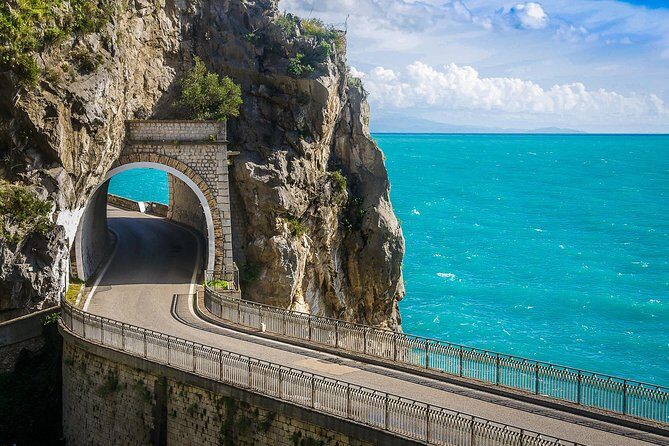
Getting from Naples to Positano can turn into a game of schedules. This private one-way transfer keeps it simple. You get pickup where you choose in Naples, then you ride in an air-conditioned private minivan with a professional driver.
What you’re really buying here is time and mental energy. Instead of figuring out connections and waiting with your luggage, the plan is straightforward: get in the van, handle the Herculaneum stop, and end with a hotel drop-off in Positano. That alone can be worth it on a day when you’d rather be watching coast views than studying timetables.
Also, it’s a private format. Only your group participates, so the pace stays tied to your group rather than a larger crowd funnel.
Other Positano tours we've reviewed



Why Herculaneum fits perfectly into a transfer day
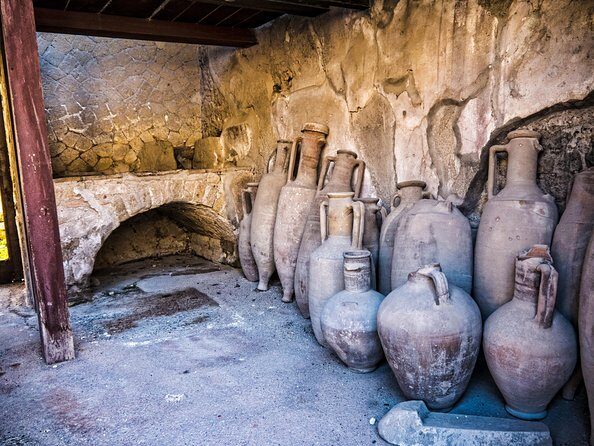
Pompeii gets all the attention, but Herculaneum has a way of feeling more intimate. The big advantage here is that you get to use your transfer time to see the ancient city without turning your day into a separate multi-hour detour.
This tour includes about a 2-hour guided stop at Parco Acheologico di Ercolano, with you meeting the guide at the ticket office. You’ll also get entrance tickets for Herculaneum included (listed as €16.00 each). After the guided portion, you’re back on track toward Positano, not stuck with “someday we’ll do this” regret.
One other practical point: the route includes several focused house and bath stops, many listed as admission free within this sequence. That helps keep the day moving while still giving you a strong cross-section of what Herculaneum is known for.
The Herculaneum route: what you’ll see at each stop

Your guided time is organized into quick, meaningful stops. In other words, you’re not trying to read everything yourself while also deciding what matters. The guide handles the context, and you handle the walking and photos.
Parco Acheologico di Ercolano (start at the ticket office)
You begin at the main Herculaneum archaeological park area. You meet the guide at the ticket office, and admission is included. Expect a short start phase (about 10 minutes) before you start moving into the ruins.
This opening matters because it sets the frame for everything that follows. Herculaneum is not just a random scatter of ancient walls—it’s a preserved Roman town, and the tour is built to help you connect the dots fast.
Casa dei Cervi (the Deer House)
Next is Casa dei Cervi, named for marble statues of stags and deer found in the peristyle. You get a quick look (about 15 minutes), but the key is what the name tells you: this wasn’t a plain, utilitarian home. Even in a smaller timeframe, you get a sense of how display, taste, and wealth showed up in everyday architecture.
If you’re the kind of traveler who likes “why is this place called that?”, this stop scratches that itch quickly.
Other private Amalfi Coast tours we've reviewed






La Terrazza di M. Nonio Balbo (a patron’s story in stone)
This stop focuses on La Terrazza di M. Nonio Balbo, tied to the city’s major benefactor. On his death, he was honored with titles and recognition described in a long inscription connected to his funeral altar.
You’ll only have about 15 minutes here, so it helps to show up expecting a snapshot, not a slow museum read. But when you’re guided, that inscription detail becomes more than trivia.
College of the Augustales
Then you move to the College of the Augustales, thought to be tied to the cult of Emperor Augustus and possibly serving as a local center connected to the Collegium Augustalium (and possibly the local curia).
This is one of those stops that helps you see Herculaneum as a town with civic and religious structure—not only private homes. Even in a short visit, it gives you a bigger map of how people organized life.
Casa del Rilievo di Telefo (and its unusual private access)
At Casa del Rilievo di Telefo, the house is linked to a prominent benefactor connection and stands out for having its own private access to the adjoining Suburban Thermae to the south.
That private-link idea is a neat way to think about status and routine. People didn’t just live around baths; some had tailored access built into the plan.
Partem Domus lignea – Casa del Tramezzo di Legno (the wooden partition)
One of the most distinctive stops is Partem Domus lignea – Casa del Tramezzo di Legno, noted as especially important because an elegant wooden partition remained.
This is the kind of detail that makes Herculaneum feel different from other Roman sites. You’re seeing not only stone and layout, but what survived from interior life, including elements tied to wood.
House of the Skeleton (named from discoveries)
The House of the Skeleton gets its name from human remains discovered in a second-floor room in 1831. This is about 15 minutes, but it carries an emotional weight.
In a fast-paced tour, the guide’s framing is important here. The stop is short, yet it helps you understand that this is not just scenery; it’s real archaeology tied to the tragedy of the eruption.
Central Thermae (men and women had separate entrances)
Then come the Central Thermae, built around the beginning of the 1st century AD. A major highlight: the baths were divided into men’s and women’s areas, each with their own separate entrances—matching the common practice of the time.
If you like architecture that reveals daily rules, this is a strong stop. In a quick window, you can see how design controlled movement and social separation.
Casa del Salone Nero (the Black Hall luxury)
Next is Casa del Salone Nero, one of Herculaneum’s more luxurious mansions. You’ll see a monumental entrance that still retains carbonised remains of the doorposts and lintel.
This is where the site’s preserved surfaces matter. Even when a stop is brief, you can spot the char marks and understand how the eruption froze parts of the town in time.
Casa Sannitica (Samnite-style atrium with frescoes)
At Casa Sannitica, the layout is described as typical of the Samnites. The atrium is skirted by a gallery with Ionic columns, and rooms are decorated with frescoes.
This stop helps you notice that Herculaneum wasn’t one-size-fits-all. There are different cultural influences in how houses were designed and decorated.
Casa del Bel Cortile (courtyard instead of an atrium)
Casa del Bel Cortile is original for its courtyard setup. Instead of a classic atrium, it has a courtyard with a stairway and a stone balcony.
Again, it’s a good “compare and notice” stop. In a guided format, you don’t just see walls—you start seeing patterns in house design choices.
House of the Grand Portal (frescoes, colonnati, charred wooden remains)
Your final stop is the House of the Grand Portal, located centrally in the archaeological area. It includes various environments, colonnati, and frescoes, plus charred remains of wooden parts.
This ending feels fitting for the route. You get a last burst of visual variety before the van is ready to move you onward.
Meet your guide (and why the guidance matters)
The guided part is the heart of the experience, and the guide makes it feel cohesive instead of like a bunch of quick peeks. In one of the standout comments, Laura was praised for knowing Roman history and bringing the site to life.
Even if you’re not a “Roman-nerd” type, a good guide helps you read what you’re seeing. Why is this house named that? What did this public area likely do? What does separate entrance design tell you about rules? Those answers turn ruins from scattered artifacts into a story you can follow.
What the “driver stays with the vehicle” really means for your day
This tour includes the practical service piece that makes a transfer day feel civilized: your driver stays with the vehicle and your bags while you do the Herculaneum walk-through.
That’s a big deal in real life. You avoid hauling luggage into a ruin area. You also reduce the stress of parking, re-checking timing, and wondering where you’re supposed to meet again. The tour’s structure is designed so you keep moving toward Positano without losing your whole morning.
And since the vehicle is air-conditioned and private, you’re not going to arrive in Positano frazzled and sweaty from long waiting and transfers.
Positano drop-off: arrive ready to enjoy, not scramble
The finish is hotel drop-off in Positano. That matters because Positano can be complicated once you arrive. If you arrive already with your bags handled and a plan for the next step, your Amalfi Coast time starts faster.
You’re also doing this as a one-way transfer from Naples. So instead of squeezing in a separate sightseeing day, you get a meaningful stop in Herculaneum and then immediately transition to the town you actually came for.
Price and value: what $456.70 per person is buying
At $456.70 per person, this is not a bargain. You’re paying for several value drivers at once:
- Private, door-to-door transport with pickup you choose in Naples and hotel drop-off in Positano
- Air-conditioned vehicle and professional driver
- Luggage transport
- A guided Herculaneum visit with entrance tickets included (listed €16.00 each)
- A format where the driver waits while you explore
Compared to cobbling together public transport and self-guided ticketing, the cost starts to look less outrageous. If you’re traveling as a couple or small group, the pricing structure tends to make more sense because you’re not splitting a single guide across dozens of strangers. And if you’re trying to keep your day efficient, “time saved” is real money.
Also, the tour is on average booked about 37 days in advance. That suggests it’s in demand, so if your dates are fixed, don’t wait until the last week.
Who this private transfer is best for
I’d point this option toward people who:
- Want a stress-free Naples-to-Positano day
- Like Roman ruins but don’t want to do Pompeii on a first go
- Prefer guided context instead of wandering and guessing
- Care about arriving in Positano with energy intact
- Travel with luggage and want someone else to handle the logistics
It’s less ideal if you’re chasing the cheapest possible transport or if you hate being on a timed schedule. The Herculaneum portion is guided and timeboxed through multiple stops, so you won’t have the option to linger as long as you might in a self-paced visit.
Should you book this private Naples-to-Positano transfer with Herculaneum?
If your priority is a smooth travel day with a meaningful stop that feels smarter than simply passing through, I think this is a strong booking. You get a private ride, you get guided Herculaneum with entrance included, and you end with hotel drop-off in Positano instead of figuring out your next move.
I’d especially consider it if you’re aiming to see Herculaneum as a contrast to Pompeii, or if you like the idea of moving through houses, baths, and public spaces in a structured way. The price is the trade-off, but when you add up convenience, guide time, and included tickets, it’s paying for a day that runs on rails.
FAQ
How long is the Naples to Positano transfer with the Herculaneum tour?
The duration is about 4 hours.
Is Herculaneum guided?
Yes. You’ll have guide and assistance by a professional guide during the Herculaneum portion.
Where do we meet the guide in Herculaneum?
You meet the guide at the ticket office of the Herculaneum ruins.
Are entrance tickets to Herculaneum included?
Yes. Herculaneum entry tickets are included (listed as €16.00 each).
Is transportation private and air-conditioned?
Yes. It’s a private air-conditioned minivan with a professional driver.
Do we get dropped off at a hotel in Positano?
Yes, hotel drop-off is included.
Are meals included?
No meals are included.
Can car seats be provided?
Car seats are available on request.
Is the tour only for my group?
Yes. It’s private, and only your group will participate.
What’s the cancellation window?
Free cancellation is available up to 24 hours in advance for a full refund.