REVIEW · POSITANO
Ceramic Class in Positano 2 hours workshop
Book on Viator →Operated by Ceramica Assunta Positano · Bookable on Viator
A ceramic workshop in Positano feels personal fast. You’ll learn majolica decoration with a local artist, then send your finished piece home after it’s fired on-site on the Amalfi Coast.
Two things I really like about this class: it’s hands-on from the first brushstroke, and you’re not just making something pretty. You’re making something that follows a local tradition with a majolica technique made famous along the coast, inside a ceramics store in Positano dating back to 1948.
One consideration: you’ll spend about 2 hours working on your piece, but you won’t take it home that day. Cooking happens in a kiln at 950°C, and shipping is arranged after firing.
In This Review
- Key highlights you can plan around
- Positano majolica ceramics: why this workshop is worth your time
- Meeting on Viale Pasitea: the start that sets the tone
- Giovanna Parlato and the Amalfi ceramic tradition primer
- Decorating your own piece: how majolica works in practice
- Limoncello break: the included pause that feels local
- The kiln at 950°C: how you get a real souvenir (not a fragile craft)
- Price and value: is $242.93 worth it?
- What the 2-hour format feels like (and how to fit it into your day)
- Who should book this ceramic class in Positano
- Tips to get the most out of your majolica session
- Should you book this Ceramic Class in Positano?
- FAQ
- Where is the meeting point?
- How long is the workshop?
- Is limoncello included?
- What happens to the ceramic piece after the class?
- Do I get anything besides the ceramic piece?
- How does cancellation work?
Key highlights you can plan around
- Giovanna Parlato leads the class, so you’re learning with a real Positano artist at the helm
- Majolica decoration is the focus, with a guided intro to the local ceramic tradition
- Everything gets fired properly: your piece goes into a kiln and slowly reaches 950°C
- Limoncello is included, not as an afterthought, but part of the workshop rhythm
- Small group size (max 8) means you’re less likely to get rushed
- A souvenir photo and shipping add real value if you hate carrying breakables through the Amalfi streets
Positano majolica ceramics: why this workshop is worth your time
If you’ve ever bought a souvenir in Italy and wondered if you could have made it yourself, this is the fix. A ceramic class like this is satisfying because you’re not just watching a demo. You’re making one clear, finished object with a method that locals have repeated for generations.
The big word here is majolica. It’s the decorative approach used on Italian ceramics that’s built around painted details over a fired base. You’ll get an explanation first, then you’ll apply the technique on your own piece. That sequence matters. Learning the logic of the style helps your decoration choices feel intentional instead of random.
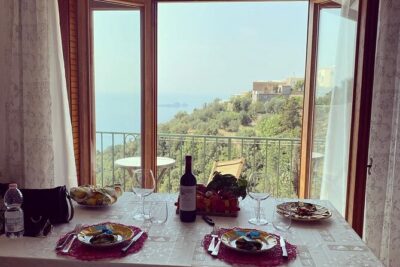
I also like that the setting is part of the experience. The class takes place in a Ceramica Assunta Positano store on a small road overlooking the sea. Even if you only catch brief glimpses between steps, you get the sense that this isn’t a craft booth dropped into a tourist strip. It’s a working ceramics shop tied to Positano.
If you're still narrowing it down, here are other tours in Positano we've reviewed.



Meeting on Viale Pasitea: the start that sets the tone
You’ll meet at Viale Pasitea, 202, 84017 Positano SA, Italy. The activity ends back at the meeting point, which keeps the plan simple. It’s a practical setup when you’re balancing hills, views, and the usual Positano walking math.
This workshop also runs like a small studio session. The group is capped at 8 travelers, and you’ll have a more personal working space than on bigger group tours. That’s not just comfortable. It usually means your questions get answered while you’re still holding the tools.
You’ll also use a mobile ticket, so you’ll want your phone charged and easy to access. Near public transportation, the meeting point is easier to plug into your day than experiences tucked deep into back streets.
Giovanna Parlato and the Amalfi ceramic tradition primer
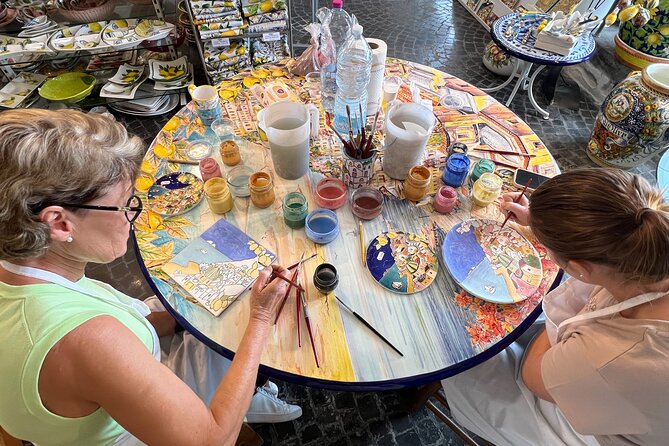
Before you paint, you get a short explanation of the ceramic tradition of the Amalfi Coast. That part is underrated. When you understand what makes the style local, you decorate with more confidence.
The class is managed by Giovanna Parlato, an artist from Positano who creates terracotta objects modeled and decorated by hand. The wording here matters: she’s not just teaching a generic activity. She’s part of the local making tradition, and the focus is on careful handwork.
You’ll also learn what comes after your work. Your piece goes into a kiln for ceramics, where it slowly reaches 950°C. That firing detail is useful because it tells you the decoration isn’t a one-time paint-and-pray step. It’s designed to survive heat and become a stable souvenir.
Decorating your own piece: how majolica works in practice
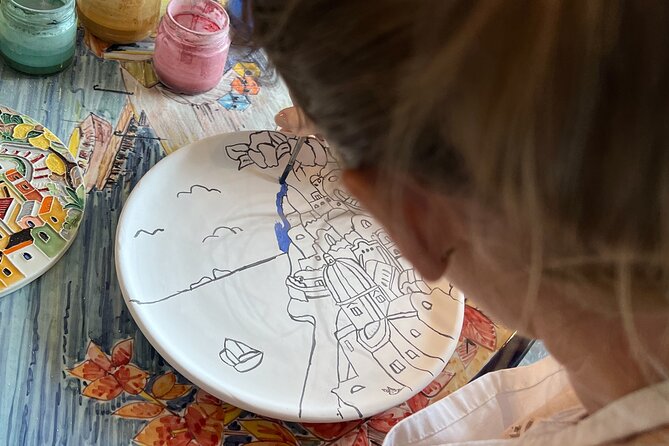
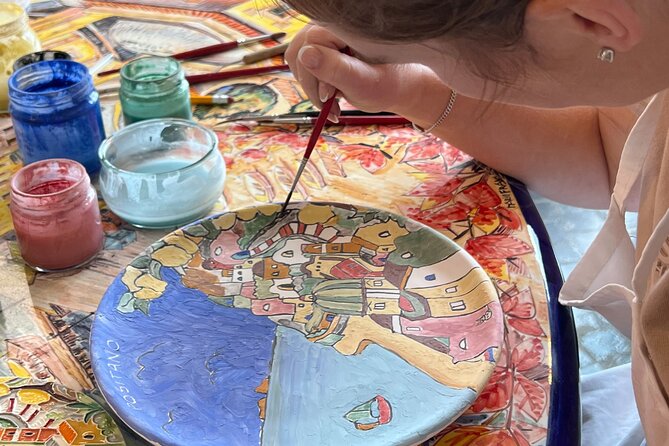
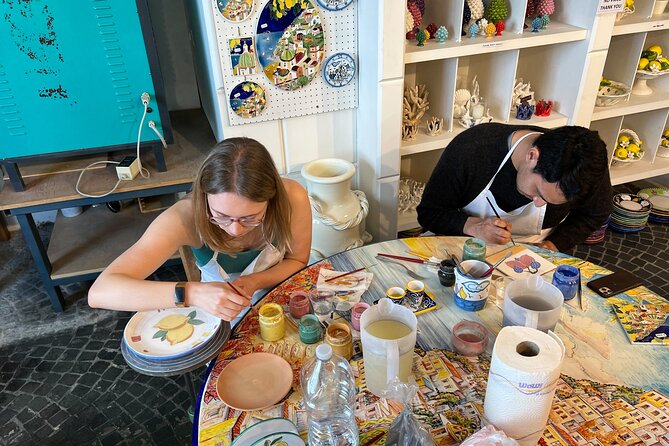
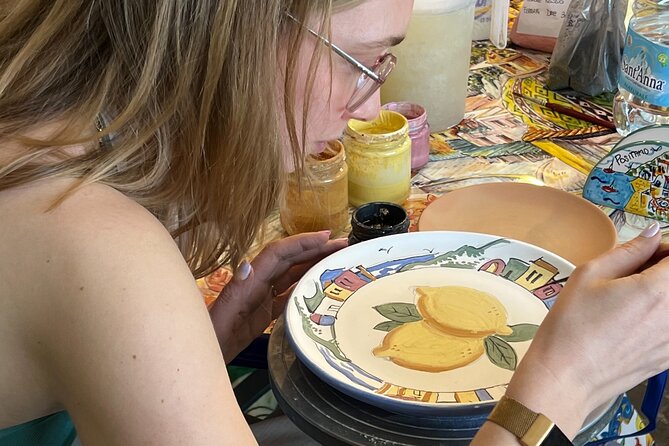
Once the basics are explained, you’ll decorate your object using the famous majolica technique. In a workshop like this, the payoff is momentum. You start with guidance, then you build your design step by step.
Here’s how to think about your role in the process:
- You’re making style choices within a guided method, not inventing a whole new ceramic language
- Your job is to apply the decoration carefully, since you’re going to see the result after firing
- The studio handles the materials and the key step you can’t do at home: professional kiln firing
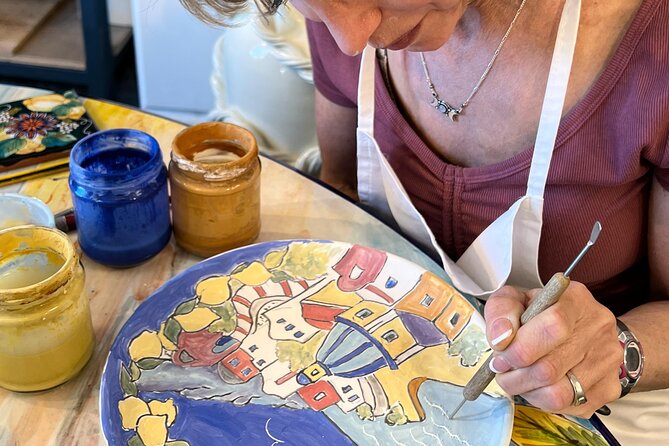
The class format is designed for most people to participate, and that matters if you’re not an art person. Even if your drawing skills are stuck at kindergarten level, the workshop structure keeps you moving. You’ll get help while you work, and you’ll finish with something that feels genuinely yours.
Also, because the store is set up for ceramics, you get the vibe of a working place. You’re not waiting around. You’re making decisions, testing colors and patterns, then seeing the piece take shape under guidance.
Limoncello break: the included pause that feels local
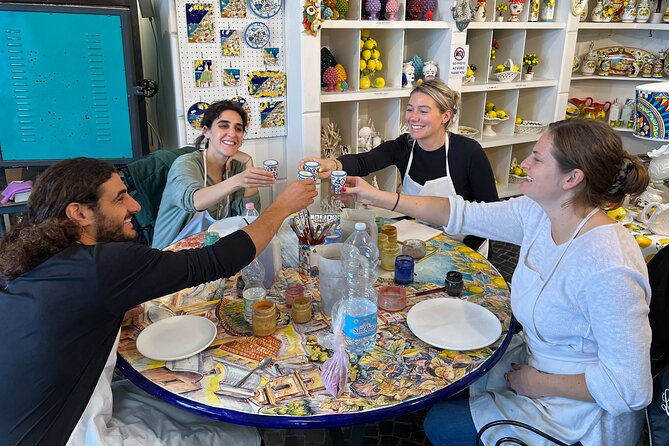
About midway through your 2-hour class experience, you’ll have a taste of local limoncello, included in the price. This isn’t just a free drink to check a box. It’s an Amalfi Coast touch that matches the setting and helps the session feel like a genuine local moment.
Timing matters here. In short workshops, the main risk is feeling rushed. A built-in pause helps you reset so you can finish your decoration with a steadier hand. I like that this class builds the social part right into the making process.
And since the workshop is in a ceramics store overlooking the sea, the break also has a natural sense of place. It’s one of those simple travel perks: you’re doing something hands-on, then you stop, sip something local, and look around at where you are.






The kiln at 950°C: how you get a real souvenir (not a fragile craft)
Your piece doesn’t go into a bag for “later.” It goes into a special kiln for ceramics. The firing step is where many tourist crafts fall apart, because the heat and process are the whole point.
Here, the process is clear: the kiln slowly brings your work to 950°C. Slow, proper firing helps ceramics mature properly so the decoration and the object itself become durable.
Then comes the part that saves you stress: shipping. The provider takes care of the necessary materials and also handles the shipment of the object after cooking is complete. So you’re not doing the Amalfi street walk with something breakable in your bag or trying to find bubble wrap on your travel day.
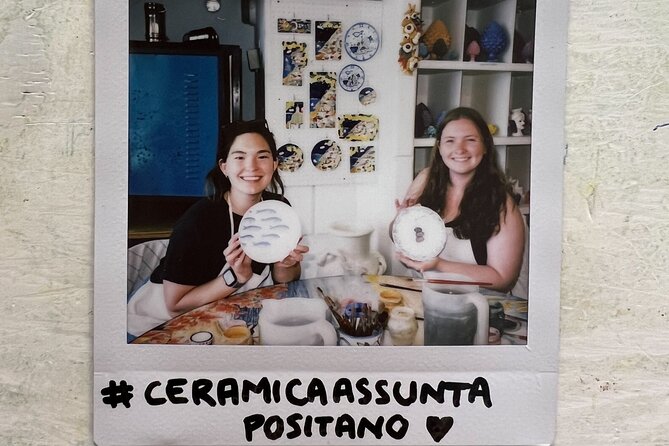
You’ll also get a nice souvenir photo included. That’s a smart add-on in a place like Positano, where you’ll likely want something better than a quick selfie on a windy corner. Pair the photo with the ceramic you’ll eventually receive, and your memory is tied to something you actually made.
Price and value: is $242.93 worth it?
At $242.93 per person, this workshop isn’t a budget activity. But it also isn’t just paying for time with paint. The value comes from what’s included and what’s handled for you.
What you’re getting for the price:
- A structured 2-hour workshop with an artist-led session under Giovanna Parlato
- A majolica-focused experience with an intro to the Amalfi ceramic tradition
- Materials handled by the studio
- Limoncello included
- A souvenir photo included
- Professional kiln firing to 950°C
- Shipment after firing, so you avoid fragile carry-home stress
If you’ve ever priced ceramics workshops that don’t include shipping, you’ll notice the hidden costs. Either you pay extra to have items packed and shipped, or you gamble with transport and hope it survives the trip.
Also, the class runs with a maximum group size of 8, which usually improves the experience quality. In a workshop setting, smaller groups translate into more attention and less waiting.
One more practical angle: you’ll likely book this kind of class on a schedule. On average, it’s booked about 65 days in advance, so if you want a specific date, start looking earlier rather than later.
What the 2-hour format feels like (and how to fit it into your day)
Two hours can sound short, but it’s a realistic length for a ceramics class. You’re not spending your afternoon standing in line. You’ll get instruction, do the decorating work, then your piece goes through the kiln process after you finish.
Because you return to the meeting point at the end, you don’t need to restructure your whole day. That’s a relief in Positano, where the town layout can make travel time feel slippery.
Here’s a simple way to plan your day around it:
- Aim for a time when you’re not rushing from one viewpoint to another
- Wear comfortable clothing since you’ll be at a studio workstation
- Keep your phone accessible for the mobile ticket
If your schedule includes lots of uphill walking, consider placing this workshop somewhere in the middle of your day. It’s a great change of pace from stairs and crowds.
Who should book this ceramic class in Positano
This is a good fit if you want a hands-on Positano activity that ends with a real, meaningful souvenir. It’s also a strong choice if you hate carrying fragile items home.
You’ll likely enjoy it if:
- You like making crafts where the final product matters
- You want something more personal than a store-bought gift
- You appreciate local technique, not just the general idea of ceramics
- You’re traveling light and prefer the idea of shipping after firing
It might not be your best match if:
- You specifically want to take the finished ceramic piece home the same day
- You only want quick photo stops and zero hands-on work
Tips to get the most out of your majolica session
A ceramics class is one of those experiences where small choices make a noticeable difference.
First, treat the decoration part like the main event. The kiln step is the payoff, but your time is spent making the design. Go in ready to focus, even if you usually drift.
Second, use questions. When you’re learning majolica decoration, ask about what to emphasize in your pattern and how to handle the technique. Since the class is capped at 8, it’s easier to get personal guidance instead of waiting for a guide to catch up.
Third, plan for the souvenir logistics. Your piece is shipped after cooking, and that means you’ll receive it later rather than in your hands that evening. If you’re moving hotels during your trip, think about timing so delivery won’t conflict with your travel schedule.
Finally, don’t underestimate the photo. The class includes a souvenir photo, so let yourself think beyond the finished ceramic. Positioning and timing inside a workshop can make a better memory than you’d expect.
Should you book this Ceramic Class in Positano?
If you want a Positano souvenir with a story you can explain, I’d book this. The hands-on majolica decoration, the artist-led format with Giovanna Parlato, and the fact that your piece gets kiln-fired at 950°C all point to a real craft outcome, not a casual activity.
The deal-maker for many people is the shipping part. You get the souvenir without the stress of carrying fragile ceramic through a hill town.
One practical reason to act: this is a small group class (max 8) and it’s commonly booked ahead. If your dates are fixed, don’t leave it until the last minute.
If you’re open to making something with your own hands and you like the idea of learning a technique tied to the Amalfi Coast, this workshop is a smart, value-minded choice.
FAQ
Where is the meeting point?
The class meets at Viale Pasitea, 202, 84017 Positano SA, Italy. It ends back at the same meeting point.
How long is the workshop?
The ceramic class lasts about 2 hours.
Is limoncello included?
Yes. You’ll have a taste of local limoncello, and it’s included in the price.
What happens to the ceramic piece after the class?
After you decorate your piece, it’s placed in a kiln and fired slowly to a temperature of 950°C. The provider also handles the shipment after cooking.
Do I get anything besides the ceramic piece?
Yes. A souvenir photo is included in the experience.
How does cancellation work?
You can cancel for a full refund up to 24 hours before the experience’s start time. Free cancellation is allowed within that window, based on the local time of the experience.