REVIEW · SALERNO
Pompeii and Amalfi Coast from the Port of Salerno
Book on Viator →Operated by Askos Tours · Bookable on Viator
Pompeii and Amalfi Coast in one day is a power move. You get private transportation from Salerno, a guided walk through Pompeii’s key sites, then free time along the Amalfi and Ravello stretch. It’s a long day, but it’s the kind that saves you from trial-and-error logistics when you only have a day (or a cruise clock) to work with.
What I like most is the mix of structure and freedom: you get a real guide in Pompeii, but you also get time to wander on your own in Amalfi. The second big win is value for what you’re actually buying—round-trip transit plus Pompeii admission fees and Pompeii guidance for one set price.
The main drawback? This is a full-day, packed route, so if you want slow, lingering museum-style pacing, you may feel time pressure—especially around Amalfi’s streets and getting everyone back on schedule.
In This Review
- Key takeaways before you go
- How the Salerno Pickup Makes the Whole Day Feel Easier
- Pompeii Entrance Through Porta Marina Superiore: What Your Guide Actually Does
- Pompeii’s Key Stops: Forum to Homes, Baths to Theaters
- Basilica: An Ancient Covered Social Hub
- Foro de Pompeya: The Main Square Moment
- Granai del Foro: Storage, Water, and the Human Scale of Catastrophe
- Casa del Menandro: When “Private” Meant Luxurious
- Stabian Baths (Terme Stabiane): The Oldest Thermal Complex Angle
- Lupanar: The Brothel You’ve Heard About
- Casa del Fauno and Teatro Piccolo/Teatro Grande: Scale, Performance, Drama
- Amalfi With Time to Wander: Mercanti Street, Gelato, and the Cathedral Area
- Ravello and Atrani: The Shortcut to Views and Old Town Charm
- Lunch, Winery, and How to Choose Without Regret
- Price and Value: What You’re Paying For (and Why It Can Be Worth It)
- The Real Secret Sauce: Guides and Drivers Matter
- Who This Tour Fits Best
- Should You Book This Tour?
- FAQ
- How long is the Pompeii and Amalfi Coast tour from the Port of Salerno?
- Is Pompeii admission included in the tour price?
- Are meals included?
- What other fees should I expect?
- Is this tour private or shared with strangers?
- Where does the pickup happen?
- What language is the tour offered in?
- Is it flexible to cancel last minute?
Key takeaways before you go
- Private ride from Salerno means less stress, no bus transfers, and easier timing for cruise days.
- Pompeii guide + Pompeii entry is handled for you, so you spend more time looking and less time figuring it out.
- Two UNESCO sites in one day: Pompeii plus the Amalfi Coast region, with Ravello and Atrani included.
- Free time in Amalfi and Ravello lets you set your own pace for photos, gelato, and cathedral-area wandering.
- Flexible lunch option in the Amalfi area, with an optional winery stop on the Vesuvius slopes if you prefer.
- Your group only keeps the day practical and avoids the usual “everyone meets back here” chaos.
How the Salerno Pickup Makes the Whole Day Feel Easier
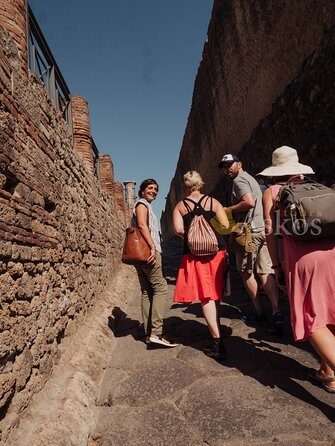
Starting in Salerno is smart. You meet the driver at your chosen pickup point—port or hotel in the Salerno area—then you’re off in an air-conditioned minivan. That matters because the distance between these sites can’t be handled casually with public transport when you’re trying to hit Pompeii, Amalfi, and Ravello in one go.
You’re also getting a day built around your constraints. For cruise passengers, timing can be everything, and several guide/driver pairings in this experience have handled exactly that kind of pressure by focusing on Pompeii’s highlights and keeping the day moving. That’s a huge quality-of-life factor when you’re working with ship schedules.
One more practical bonus: the tour uses a mobile ticket, so you’re not juggling paper or last-minute printouts.
Other Pompeii tours we've reviewed

Pompeii Entrance Through Porta Marina Superiore: What Your Guide Actually Does
In Pompeii, you’ll meet your guide at the main entrance called Porta Marina Superiore. Your guide will be holding a sign for Askos Tours, so you’re not wandering around looking for a group like it’s a scavenger hunt.
Then you start with an overview and a route that’s designed for a single-day visit. Pompeii is enormous, and going solo often turns into “I see a wall… and another wall.” The guide’s job here is to point out what’s meaningful—market life, public space, homes, and the everyday tech of Roman life—so the ruins make sense fast.
One small but important detail: Pompeii admission is included, but not everything you might see elsewhere later is automatically covered. Still, within Pompeii, the major ticket cost is handled, and your guide time is built in.
Pompeii’s Key Stops: Forum to Homes, Baths to Theaters
This is where the tour earns its name. Your Pompeii walk is packed with high-interest stops that show different sides of Roman city life, not just “look at the ruins and take pictures.”
Basilica: An Ancient Covered Social Hub
You’ll spend time at the Basilica, an open portico area that once sheltered merchants and other daily activity. It’s one of those places where the stones feel less like a monument and more like infrastructure—Roman life built for commerce and crowds.
Foro de Pompeya: The Main Square Moment
Next comes the Forum, Pompeii’s ancient main square. You’ll get a look at the space where civic life and business intersected. Even if you don’t know Latin or Roman law, the physical layout helps you understand why this center was central.





Granai del Foro: Storage, Water, and the Human Scale of Catastrophe
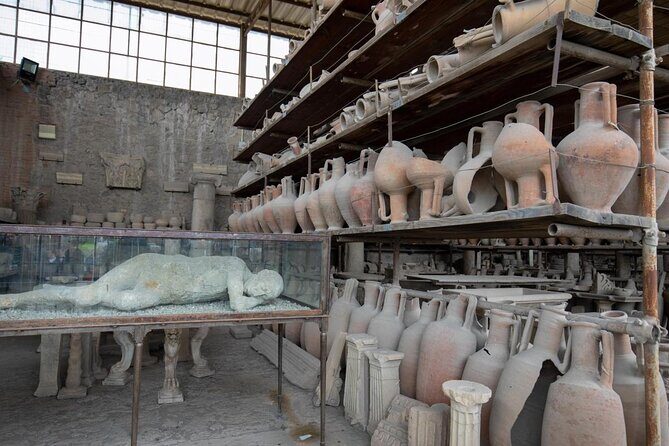
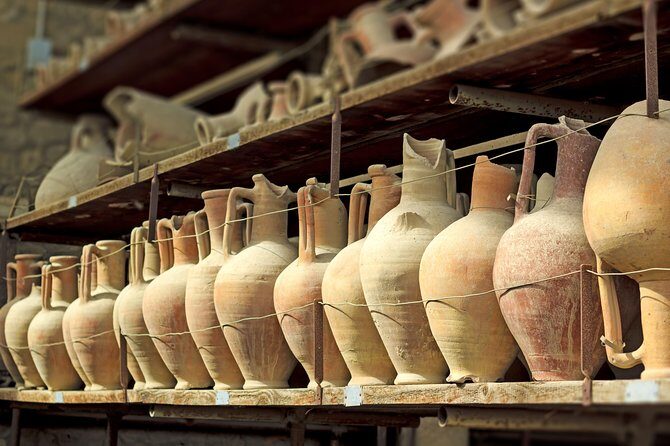
At the Granai del Foro, you’ll see marble tables and baths for fountains that once adorned entrances to houses. This is also where you’ll encounter casts associated with the eruption—people, and even a dog and a tree. It’s not a “comfortable” stop, but it’s powerful, and it turns the earthquake-and-ash story into something you can picture.
Casa del Menandro: When “Private” Meant Luxurious
The Casa del Menandro is one of the richest and most magnificent houses in Pompeii, especially for architecture, decoration, and what it contains. This is the kind of home where Roman wealth becomes visible in layout and materials, not just style.
Stabian Baths (Terme Stabiane): The Oldest Thermal Complex Angle
You’ll also see the Stabian Baths, a vast thermal complex considered the oldest of its kind in the city. Baths were where people met, talked, exercised, and processed gossip. Walking these spaces helps you understand Pompeii wasn’t just streets and temples—it was routine life, including leisure.
Lupanar: The Brothel You’ve Heard About
Then comes the Lupanar, the famous brothel in the ruined city. It’s a frank, uncomfortable part of history, but it’s also a key reminder that Roman society had systems and spaces we’d rather not romanticize. If you’re sensitive to adult themes, just know this stop is clearly part of the program.
Casa del Fauno and Teatro Piccolo/Teatro Grande: Scale, Performance, Drama
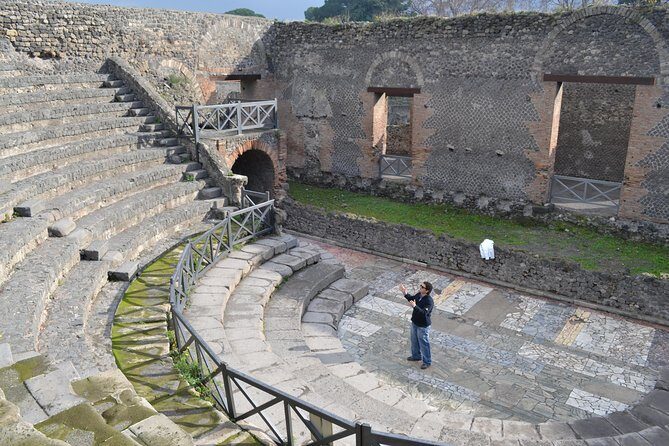
You’ll move from the Casa del Fauno, one of Pompeii’s largest impressive private residences, to the theater spaces: first a look at Teatro Piccolo, then time at Teatro Grande, the city’s most important theater. These stops help you see Pompeii’s entertainment side—the public mood, the stage, and the scale of gathering spaces.
Amalfi With Time to Wander: Mercanti Street, Gelato, and the Cathedral Area
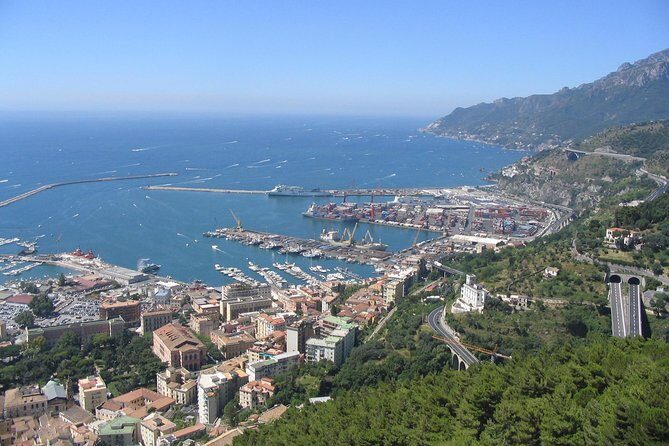
After Pompeii, you’ll transfer toward the Amalfi Coast and get a lunch window. The plan gives you options: you can eat at a typical Italian restaurant or pizzeria in the Amalfi area, and there’s also an optional winery stop on the slopes of Mt. Vesuvius if you’d rather swap lunch for a tasting-style break.
Once in Amalfi, your route focuses on a classic walk-and-look approach:
- Ruga Nova Mercatorum (Via dei Mercanti): This is the main street vibe—great for window-shopping and taking in the feel of the town.
- A stop near Fontana Sant’Andrea, where you can pause for photos.
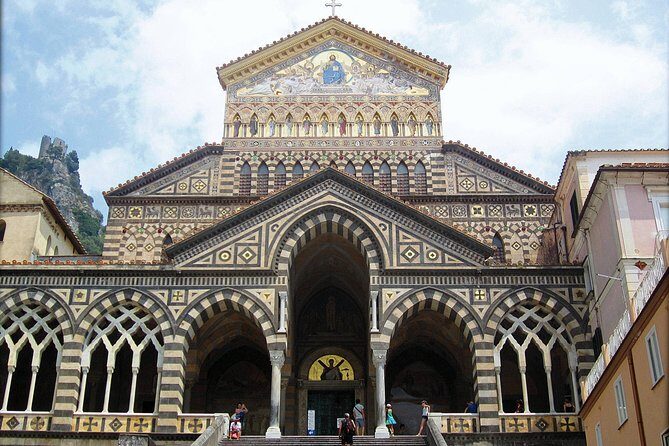
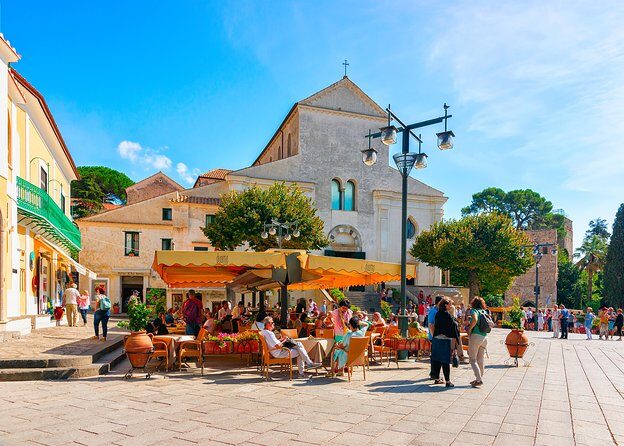
- Time around the Cathedral of Saint Andrew (Duomo di Sant’Andrea). Even if you don’t go inside (and entrance fees may not be included), the exterior and the surrounding area help you place Amalfi historically and visually.
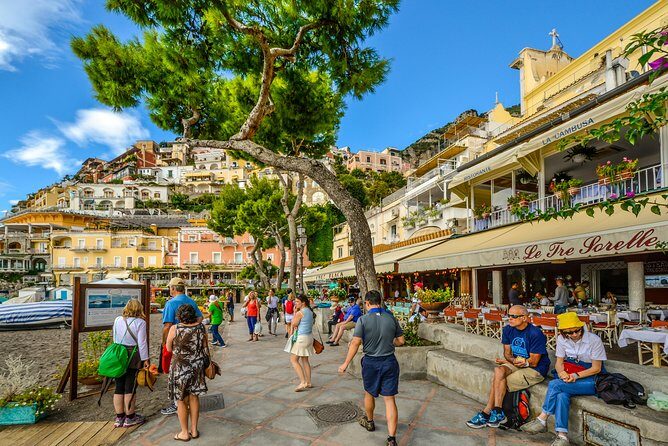
The tour also builds in small stretches of personal freedom—time for a walk at your pace, plus the chance to grab gelato. When you’re dealing with tight schedules, these pockets of unstructured time are what keep the day from feeling like a nonstop sprint.
Ravello and Atrani: The Shortcut to Views and Old Town Charm
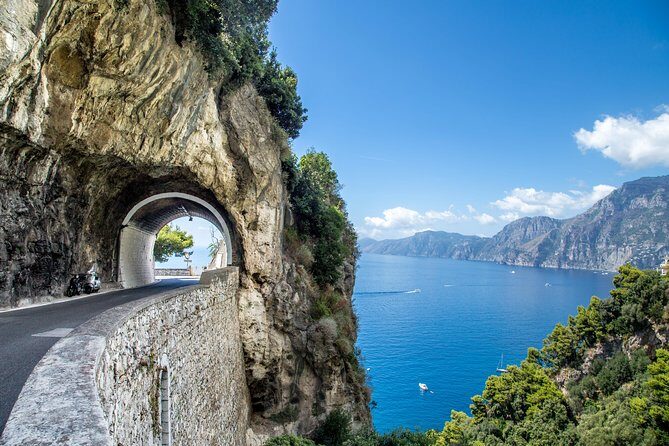
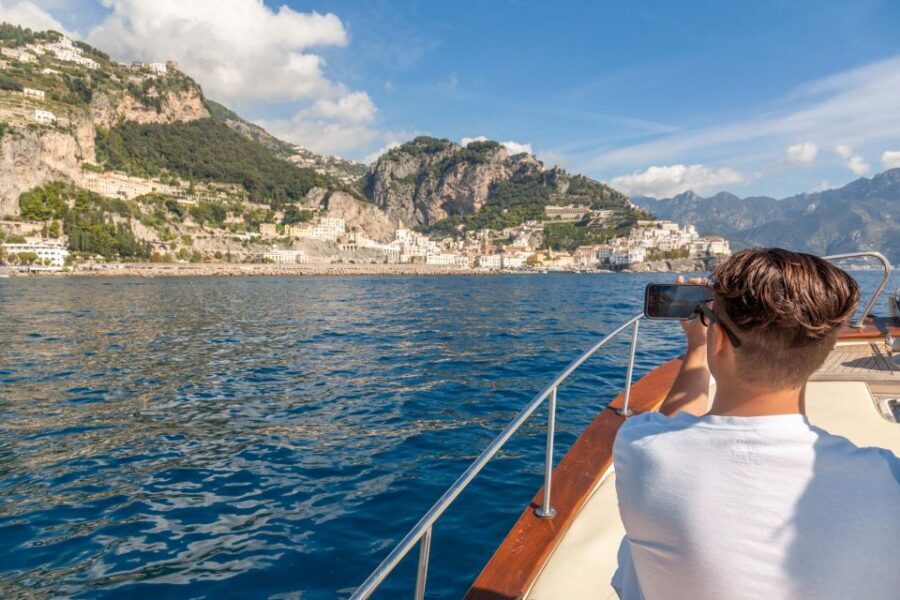
Next you’ll head to Ravello for a quick downtown walk. Ravello is often about viewpoints and quieter streets, and the tour’s “quick walk” format is a good fit if you’re balancing Pompeii fatigue with coastal scenery.
Then you’ll do an Atrani walk. This part matters because Atrani feels less like a postcard theme park and more like a real small town tucked into the coast. You’ll get time to walk among nature or explore older center streets and small shops, which is exactly the kind of stop you can’t always guarantee with a fast bus schedule.
Lunch, Winery, and How to Choose Without Regret
You have two different moods you can pick for that midday break:
- If you want classic comfort, choose lunch in Amalfi at a typical restaurant/pizzeria.
- If you’re more interested in drink and views, consider the winery option on the slopes of Mt. Vesuvius.
Here’s my practical advice: if you’re traveling as a family or with anyone prone to getting travel cranky, lunch in Amalfi is easier and less variable. If you’re a wine person and the weather cooperates, the Vesuvius winery stop can be a memorable twist that still keeps the day on track.
Either way, meals are not included in the tour price, so plan for your own lunch spend.
Price and Value: What You’re Paying For (and Why It Can Be Worth It)
At $496.21 per person, this isn’t a budget outing. But the price makes sense when you factor in what’s included:
- full-day private transportation in an air-conditioned minivan
- port or hotel pickup/drop-off
- private guidance in Pompeii
- Pompeii admission fees
That combo is the key. In many cities, you’d pay separately for a driver, entry tickets, and a guide. Here, the core pieces are bundled, and Pompeii guidance is the part that most affects how much you get out of the ruins.
It’s also booked far ahead on average, which signals demand. If you’re sailing into Salerno on a fixed day, booking early is a smart move so you don’t end up scrambling with options that don’t match your schedule.
The Real Secret Sauce: Guides and Drivers Matter
This experience is at its best when the guide and driver are on their game, and the names you’ll see attached to great days include Luigi, Mena, Giovanni, Serena, Luca, Alice, Teresa, and Angelo. That’s not just nice trivia—good communication is what keeps a packed route enjoyable instead of stressful.
A strong guide turns “I’m standing in an old street” into “I know what this was used for.” A strong driver handles the practical reality of Amalfi traffic and getting everyone back on time. If you’re only doing one full day in the area, that coordination is the difference between a win and a half-finished plan.
Who This Tour Fits Best
This is a strong match if:
- you want a one-day hit list of Pompeii plus Amalfi and Ravello
- you’re short on time (like a cruise stop)
- you like guided history but also want some freedom to wander
- you prefer private logistics over public transit juggling
It might be less ideal if:
- you want lots of museum-style sitting time
- you hate tight schedules or long walking stretches
- your group wants a very slow pace with lots of repeat stops
Should You Book This Tour?
Yes—if you want maximum value from a single day and you’d rather spend your energy looking at ancient life than figuring out trains and meeting points. The blend of Pompeii guidance + included Pompeii ticket + private transportation makes it one of the more sensible ways to connect these two UNESCO-listed stops from Salerno.
If you’re on the fence, base your decision on your walking stamina and your tolerance for a full itinerary. If that sounds like your kind of day, book it. If you want a relaxed, week-like pace, you may be happier splitting the region into separate days instead.
FAQ
How long is the Pompeii and Amalfi Coast tour from the Port of Salerno?
It runs about 8 hours (approx.).
Is Pompeii admission included in the tour price?
Yes. Pompeii admission fees are included.
Are meals included?
No. Meals are not included.
What other fees should I expect?
Other entrance fees may apply, since they are listed as not included.
Is this tour private or shared with strangers?
This is a private tour/activity. Only your group will participate.
Where does the pickup happen?
You can meet the driver at the port, your hotel, or another meeting location in the Salerno area.
What language is the tour offered in?
The tour is offered in English.
Is it flexible to cancel last minute?
You can cancel for a full refund up to 24 hours in advance of the experience start time.