REVIEW · ROME
Villa Cimbrone in Ravello and Amalfi Coast from Rome
Book on GetYourGuide →Operated by Romaetravel · Bookable on GetYourGuide
A day trip to Ravello can feel like a cheat code. You get the Amalfi Coast views from Villa Cimbrone, then you roll straight into the storybook towns of Amalfi and Positano. I love the sheer variety here: formal garden artistry up top, then real seaside-life streets below. The one catch is physical: the villa paths and town stairways add up fast, so plan for comfortable shoes.
What makes this work so well is the format: a private group with hotel pickup and drop-off, plus a guide who can connect the sights into a coherent day. In my mind, the biggest payoff is how the visit to Villa Cimbrone sets the mood before you ever reach Amalfi or Positano—one breath of sea air, then sudden beauty everywhere you turn. If you want an easy, low-walking day, this probably won’t fit.
In This Review
- Key highlights you’ll actually care about
- Villa Cimbrone in Ravello: why it’s the best way to start
- Walking the gardens: statues, terraces, and the Tea Room
- Getting to the Amalfi Coast: a Mercedes transfer that keeps the day sane
- Amalfi: the church staircase and the maze of white houses
- Positano: whitewashed houses, staircases, and what locals sell
- Time, energy, and how to pack for a 12-hour day
- Price and value: what you’re paying for at $545 per person
- The guide makes the day: Giulia, Marco, and Stefano
- Who should book this Villa Cimbrone and Amalfi Coast day trip?
- Should you book? My take
- FAQ
- FAQ
- Is lunch included on this tour?
- How long is the tour?
- Do I need to pay entrance fees separately?
- Where does hotel pickup happen?
- What languages is the guide speaking?
- Is the tour wheelchair accessible?
Key highlights you’ll actually care about
- Villa Cimbrone viewpoints: Ravello’s famous “big picture” angles over the coast
- Viale dell’Immenso pergola: wisteria’s white-and-blue show in summer
- Garden statuary trail: stops like Statue of Ceres, Poggio of Mercury, Temple of Bacco, and Eve Cave
- Amalfi’s Sant’Andrea: the standout staircase plus the Arab-Norman bell tower and Cloister of Paradise
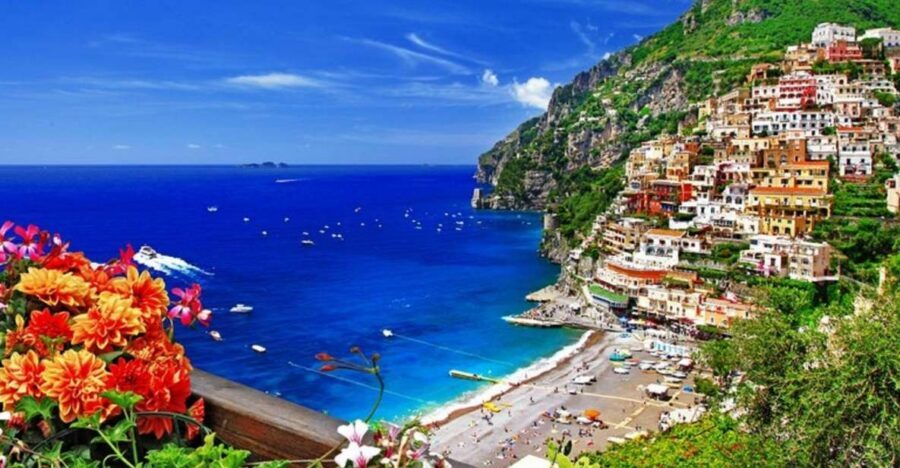
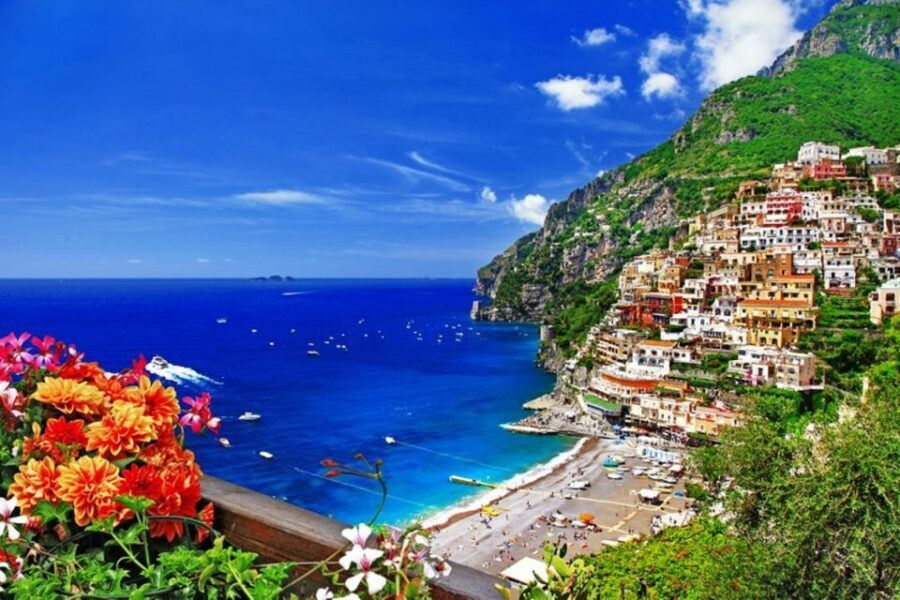
- Positano’s vertical town layout: winding staircases, whitewashed houses, and local sandal and linen shopping
Villa Cimbrone in Ravello: why it’s the best way to start
Villa Cimbrone is one of those places where you understand the word view, in a literal way. You start in Ravello, and right away the coast opens up in front of you. From the villa grounds, you can admire the profile of the Cilento Mountains in the distance, and you’ll also catch sight of the plain where the ancient city of Paestum was built. That matters because it turns a pretty panorama into something you can mentally map.
The “wow” comes fast, but it’s not just one postcard spot. The grounds are immense, and the route gently guides you from one garden set-piece to the next. As you move along, you’re not racing to tick off landmarks—you’re walking a designed experience. That’s a big deal on a long day, because it keeps things enjoyable instead of chaotic.
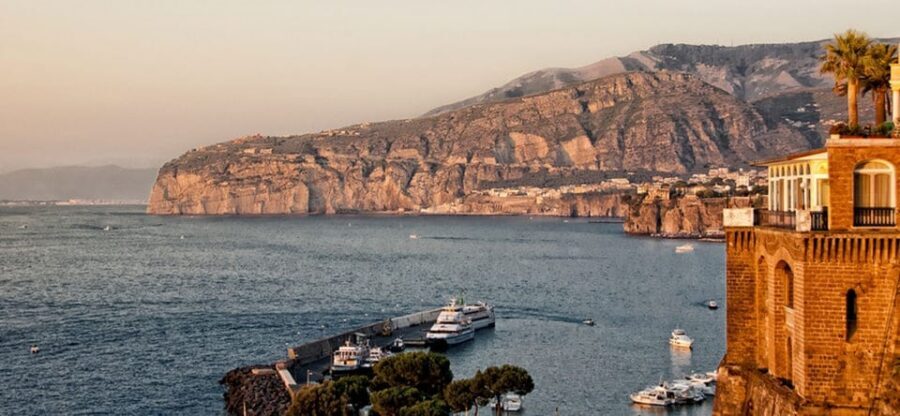
If you’re prone to shopping-mode travel, this stop is a nice reset. You’re focused on architecture, plants, and sculpture rather than crowds and queues. And when the light hits the sea, the whole coast looks layered—cliffs, beaches, and the towns stacked along the rock.
Other Ravello tours we've reviewed

Walking the gardens: statues, terraces, and the Tea Room

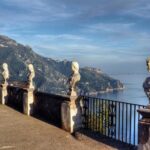
Villa Cimbrone’s gardens feel like an outdoor museum, but not in a stiff, museum-only way. The paths include classical touches—temples and statues placed where they’ll pull your eyes from one angle to the next. The main path is Viale dell’Immenso, which includes a pergola. In summer, the wisteria can bloom in white and blue, creating a tunnel effect that makes the walk feel special even before you reach the coasts’ big views.
Some of the specific stops on the route include:
- The Statue of Ceres
- The Poggio of Mercury
- Temple of Bacco
- Eve Cave
- A copy of the Statue of David
- Roses Terrace
- The Tea Room, a rectangular garden area with a Moorish-style gazebo
I like that this mix prevents “same-same” garden wandering. Statues keep it narrative, terraces give you pauses, and little garden pockets like the Tea Room offer a change of pace. You’ll also notice how the villa uses framing—where you stand matters. The guide helps you shift your attention from one feature to the next so the gardens become a route, not just scenery.
Practical note: the grounds involve walking on paths and terraces. Even if you’re in good shape, keep your pace steady. If you start to feel rushed, slow down—this is the part of the day where a calm rhythm pays off.
Getting to the Amalfi Coast: a Mercedes transfer that keeps the day sane

After the villa visit (and a break), you’ll head into the Amalfi Coast area by car. The tour uses a Mercedes vehicle, and you’ll be picked up from your hotel, apartment, or bed and breakfast located within the Aurelian Walls in Rome. Having that included is a real convenience, because Amalfi-area logistics are tricky enough that you don’t want to spend your morning fiddling with transit.
This is also where the “private” nature matters. You’re not stuck absorbing someone else’s pace or meeting tight group deadlines every ten minutes. You can simply focus on the ride, the scenery changes outside your window, and the mental transition from Ravello’s height to the sea-level towns.
The guide’s job here is more than driving commentary. A good guide helps you understand what you’re looking at when the coastline starts reading like layers—orange groves and lemon trees referenced in the area’s identity, houses clinging to rock, and the maze of alleys that make each town feel separate.
Amalfi: the church staircase and the maze of white houses
Amalfi is the town that gives its name to the Costiera. It sits at the mouth of the Valle dei Mulini, and the town form really tells the story: white houses cling to the rock, with covered alleys and stairways connecting everything. If you’ve ever wondered why Amalfi feels like it was built for walking uphill, this is your answer.
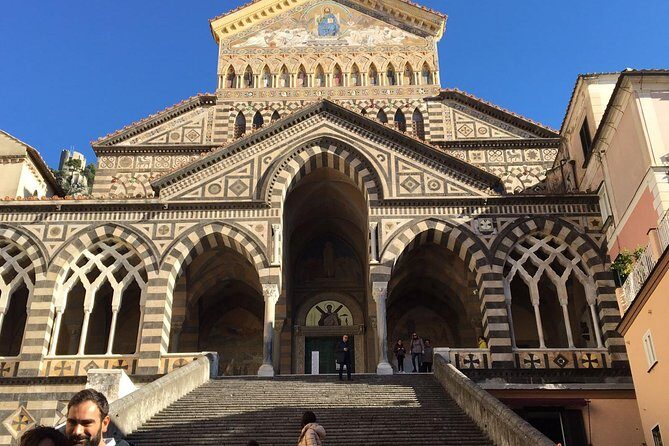
The central anchor is the Cathedral of Sant’Andrea. What stands out immediately is the spectacular staircase and the bell tower in Arab-Norman style. Then there’s the Cloister of Paradise, which adds a calmer, more architectural counterpoint to the movement of the streets around it.
Here’s the value of touring Amalfi with a guide instead of wandering randomly: you learn what to look at and why. The streets can be charming, but without context you can miss the exact spot that explains the town’s character. With the right guidance, you can connect the vertical layout, the mix of styles, and how the cathedral area fits into the rhythm of alleys.
Food isn’t included on this tour, so if you plan to snack in Amalfi, I’d come with a strategy. You’re in a walk-heavy stretch of the day, and grabbing something quickly helps keep your energy for Positano afterward.
Positano: whitewashed houses, staircases, and what locals sell
Positano is one of those places where the town looks like it grew out of the mountains on purpose. The houses follow the natural slope, creating a vertical feel: winding staircases, whitewashed facades, and views that keep changing as you move. The result is that you don’t just arrive in Positano—you keep arriving, block by block.
Positano also has a clear identity beyond scenery. It’s known for the production of leather sandals and for cotton and linen clothes. If you want a souvenir that actually belongs here, those are the categories to look for. The town is also recognized for beautiful 19th and 20th century buildings, so even if you’re not shopping, the architecture gives you something to pay attention to while you walk.
As you explore, expect the streets to be compact and the pace to be physical. Even if you keep to the main walking lines, the stairways mean you’ll feel the day. I’d treat Positano like a “slow sightseeing” finish rather than a sprint. That way you get time for the postcard angles and for the small details—doors, terraces, and little corners that feel made for photos.
Other day trips from Rome we've reviewed






Time, energy, and how to pack for a 12-hour day
This experience runs about 12 hours. That long window is part of the value, because it combines Ravello plus two major Amalfi Coast towns in one go. The trade-off is that you’ll need to manage energy. You’re dealing with hills, stairs, and long views—great for your eyes, less great for sore feet.
Here’s my practical packing approach based on what the tour expects:
- Wear comfortable shoes with grip
- Bring your own drinks and snacks since food and drinks aren’t included
- Use layers: mornings and late-day sea air can feel different than you expect
Also, the tour isn’t wheelchair accessible, which usually means uneven ground and stairs in key areas. If mobility is limited, it’s better to choose a different format that’s designed around flatter routes.
Price and value: what you’re paying for at $545 per person
At $545.42 per person for a private day that covers Villa Cimbrone, Amalfi, and Positano, you’re not just paying for entry tickets. You’re paying for the whole machine: hotel pickup and drop-off (within the Aurelian Walls), transportation by Mercedes, a professional guide, entrance fees, and a private-group setup.
For me, this is the value math:
- Villa Cimbrone alone can swallow an entire morning, and it’s a big site to navigate. Having a guide helps you see the meaningful parts of the gardens instead of wandering without a route.
- Amalfi and Positano are two different towns with their own “why it’s special” moments. Guides help you focus on the Cathedral of Sant’Andrea area in Amalfi and the staircase-and-townline feel in Positano.
- The private element reduces stress. You’re not juggling other groups, and you get to move as a unit.
Could you do this on your own with trains or buses? Maybe, but you’d spend a lot of the day translating schedules, managing transfers, and figuring out how to visit Ravello efficiently. Paying for the guided private day is essentially paying for time and clarity.
Worth noting: the tour includes a professional guide who speaks English and Italian, which helps if you want real explanations rather than just directions.
The guide makes the day: Giulia, Marco, and Stefano

The most praised part of this experience is the way the guides run the day. Giulia is called out as spectacular, and that tracks with how important this route is. A coast day can turn into a random walk if nobody explains what you’re looking at. With the right pacing and the right focus, the day feels smooth and intentional.
Marco and Stefano also get strong marks as hosts—professional, friendly, and good at making the experience feel comfortable. That kind of guiding matters most during transitions: after Villa Cimbrone, when you’re shifting to Amalfi, and again when Positano’s stair-and-street layout can overwhelm you if you don’t know where to head first.
If you care about not just seeing places, but understanding them as you go, this tour’s guide quality is a major reason the rating comes in high.
Who should book this Villa Cimbrone and Amalfi Coast day trip?
I’d recommend this for you if you:
- Want a single-day hit of Ravello, Amalfi, and Positano without dealing with complex logistics
- Enjoy gardens, statuary, and terrace viewpoints as much as towns and churches
- Prefer a private-group pace with a guide who can keep the day coherent
I’d skip it if:
- You need a low-walking, flat-route itinerary (there’s no wheelchair access)
- You hate stair-heavy walking and aren’t up for hills and terraces
This is also a good choice for couples and small groups because the tour is private, and there’s a minimum of 2 people required per booking.
Should you book? My take
Book this day trip if you want the Amalfi Coast experience in one organized, guided shot. Villa Cimbrone gives you the “big view” moment, Amalfi adds architecture and town character around Sant’Andrea, and Positano finishes with that unmistakable stair-and-white-house feel plus local shopping for sandals and linen/cotton.
Don’t book it if you’re hoping for an easy afternoon. The day is long, the terrain is real, and you’ll do a good amount of walking. If you go in prepared—shoes, snacks, steady pace—you’ll come away with more than photos. You’ll have a well-shaped day with clear highlights and a guide who knows how to steer it.
FAQ
FAQ
Is lunch included on this tour?
No. Food and drinks are not included, but you’re welcome to bring your own drinks and snacks.
How long is the tour?
The duration is 12 hours.
Do I need to pay entrance fees separately?
No. Entrance fees are included.
Where does hotel pickup happen?
Pickup is included from your hotel, apartment, or bed and breakfast located within the Aurelian Walls.
What languages is the guide speaking?
The live tour guide is available in English and Italian.
Is the tour wheelchair accessible?
No. This tour is not wheelchair accessible.