REVIEW · ROME
Private Tour: Pompeii and Positano Day Trip from Rome
Book on Viator →Operated by Driverinrome · Bookable on Viator
A day trip that mixes Roman ruins and cliffside beaches is hard to beat. This one runs long, but the private setup cuts stress and keeps the day moving toward the places you actually came for.
Two things I like a lot: the hotel pickup/drop-off door-to-door feel, and the choice to add a Pompeii guide so you’re not just walking around guessing. One thing to consider: it’s an 11-hour day with plenty of car time, and that means you’ll need to be realistic about how much you can do at each stop.
In This Review
- Key things to know before you go
- Rome to Pompeii and Positano: what makes this private day work
- The morning drive: Castelli Romani and a quick Montecassino hit
- Pompeii: the part of the day you’ll remember most
- The Bay of Naples and Vesuvius: scenery with a wake-up call
- Amalfi Coast driving: real views, limited time to savor them
- Positano free time: how to make your 2 hours count
- Want a crowds-smart swap? Positano can become Sorrento
- How the guided Pompeii upgrade changes your day
- Value check: is €15 Pompeii + a long day worth it?
- Timing tips to protect your best moments
- Who should book this tour from Rome?
- If you book, what to do once you’re there
- Should you book this Rome to Pompeii and Positano day trip?
- FAQ
- What time does the tour start, and how do I get picked up?
- Is this a private tour or will I share it with others?
- How long is the day trip?
- What’s included in the price?
- Do I need to pay for Pompeii entrance?
- Is lunch included?
- Can I replace Positano with Sorrento?
- How much walking is involved?
- What if traffic delays the schedule?
- What’s the cancellation policy?
Key things to know before you go
- Door-to-door private transport from your Rome lodging, with an air-conditioned vehicle
- Pompeii option for self-explore or an upgrade with an English-speaking guide
- Free time at Positano (or Sorrento) so you can shop, eat, and wander without a giant group
- A morning drive that includes Montecassino (a quick look at an important abbey) and Bay of Naples sights
- Traffic can squeeze the clock, especially in high season, but the route aims to still cover key stops
- The driver is not the guide on foot (Italy’s guide rules), so explanations outside the vehicle are limited
Rome to Pompeii and Positano: what makes this private day work

This is the kind of trip that saves you from the two biggest Rome day-trip headaches: figuring out buses and trains, and then losing time to connections and schedules. With hotel pickup and a dedicated vehicle, the day starts clean and straightforward at 7:30am, and it ends with you back at your place in Rome.
The private format also gives you something public transport can’t: pacing. You’re not forced to keep up with a big group. If you want to slow down in Pompeii, stop for photos, or take your time strolling Positano’s lanes and viewpoints, you can.
There’s no way around the downside, though. This is a long day with a long drive. You’re crossing the region, and even with a well-planned route, you’ll spend hours in the car. If your dream day is mostly walking, you may feel the tradeoff.
Other Positano tours we've reviewed



The morning drive: Castelli Romani and a quick Montecassino hit
After pickup in central Rome, you head south into Campania. Along the way, the route passes through the Castelli Romani area—small hill villages around Lake Albano and Lake Nemi. This part of Italy has a reputation for food and a simpler pace than big-city life, and you get a taste of that without needing a whole extra stop.
Then comes Montecassino, home to an abbey founded by Saint Benedict in 529 and one of Europe’s oldest monasteries. It’s also tied to major 20th-century history: the abbey was nearly destroyed during the WWII battle that shares its name, then carefully rebuilt and reconsecrated by Pope Paul VI in 1964. You won’t be there for hours, but this brief look is a meaningful context-builder before the day turns toward ancient ruins.
The real value of the morning drive isn’t that you’ll see everything—it’s that you’ll understand the region. You’re moving from Rome’s orbit into Naples-area geography, and you get that “why this place matters” feeling early.
Pompeii: the part of the day you’ll remember most
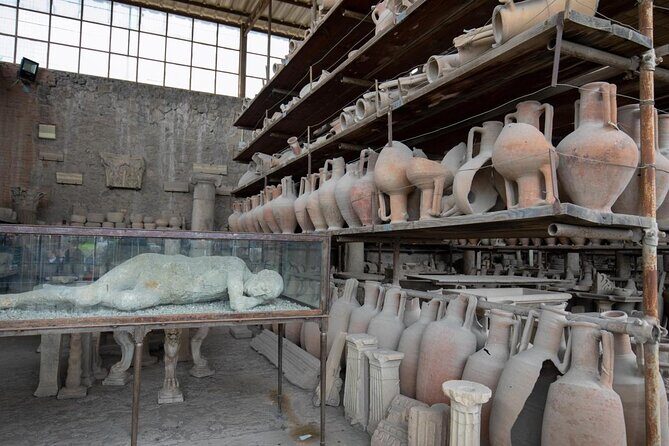
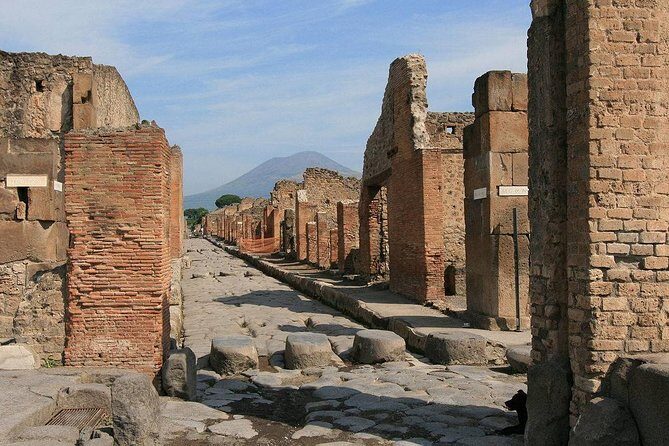
Pompeii is the anchor. This is where AD 79 comes alive: the eruption of Mount Vesuvius rained ash and molten pumice on the city, preserving it in a way modern visitors can still walk through. It’s UNESCO-listed, and it’s famous for a reason—but it can also be overwhelming if you’re not sure what you’re looking at.
Here’s how the experience is set up for you:
- You’ll handle the Pompeii entrance fee on your own (about €15, plus the “Pompeii Archaeological Park” entrance listed as €15 per person).
- Inside, you have time to explore at your own pace.
- If you upgrade, you’ll add a professional English-speaking Pompeii guide who explains the Forum, thermal baths, and other daily-life parts of the city.
If you’re the type who loves to connect ruins to real routines—markets, public spaces, everyday comfort—paying for the guide upgrade is often worth it. It turns “cool ancient buildings” into “I get what people did here.”
If you prefer independent wandering, self-guided works too. Just plan to spend your limited time choosing priorities, because Pompeii is huge and the site has uneven ground. You’ll want comfortable shoes, and you should expect a moderate amount of walking.
One more practical point: the driver isn’t a licensed guide for extended on-foot commentary. They can explain from inside the vehicle, but real storytelling on-site needs a licensed guide—especially if you want the Forum and thermal baths to make sense quickly. Several guide pairings in this setup are praised for helping people move through crowds and see more than they could alone.
The Bay of Naples and Vesuvius: scenery with a wake-up call
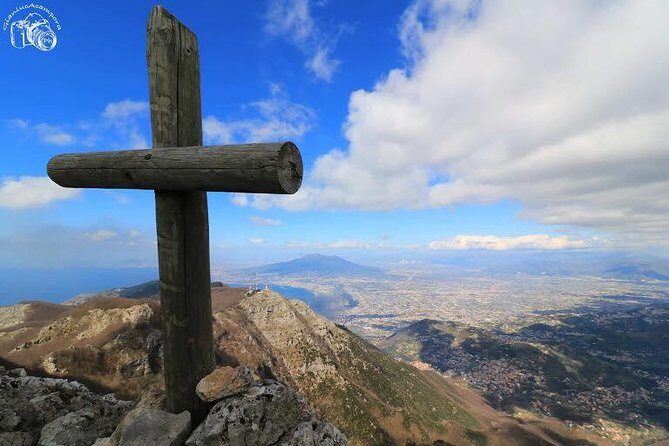
Between Pompeii and the Amalfi Coast stretch, you’ll get a Bay of Naples panorama and a chance to see Mount Vesuvius from the road. The tour notes that around 3,000,000 people live in Vesuvius’s shadow, which is a stark reminder that this is not just a volcano in a textbook. It’s a living, inhabited region.
The scenery matters here because it changes your mental frame. When you drive the route near the coast and see the volcano looming over towns, Pompeii feels less like an isolated ruin and more like a sudden event that interrupted a real community.
You’ll also learn about the Sorrentine peninsula and how Sorrento sits at the edge, before the dramatic Amalfi Coast begins. Even if you’re mostly using this segment for travel time, it’s a valuable travel-time payoff.
Amalfi Coast driving: real views, limited time to savor them
Once you’re on the Amalfi Coast approach, you’ll drive along a dramatic stretch of coastline to reach Positano. This is where timing becomes personal. In high season, traffic can be intense enough that time at Pompeii or Positano can shrink. The tour is designed to still hit the key sights, but your free-time minutes aren’t guaranteed.
In a long day, that means your strategy matters:
- Treat the drive as part scenery, part transportation.
- Don’t assume you’ll stop everywhere for photos unless your day stays on schedule.
If you’re traveling in summer, go in with your expectations set. It’s not a slow, romantic coast cruise. It’s more like: stare out the window when you can, then use your real walking and wandering time where you’ll get the biggest payoff.
Other private Amalfi Coast tours we've reviewed






Positano free time: how to make your 2 hours count
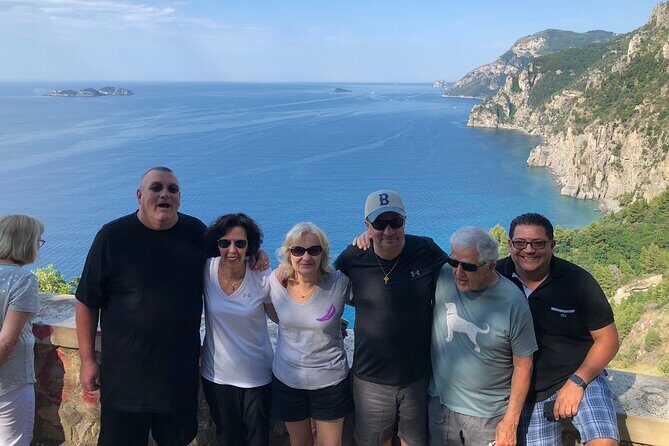
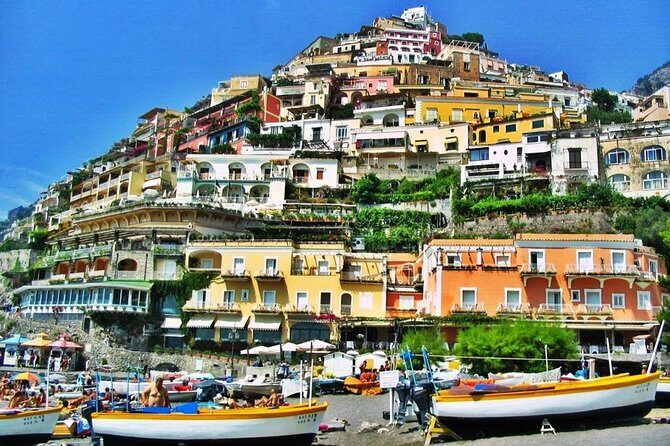
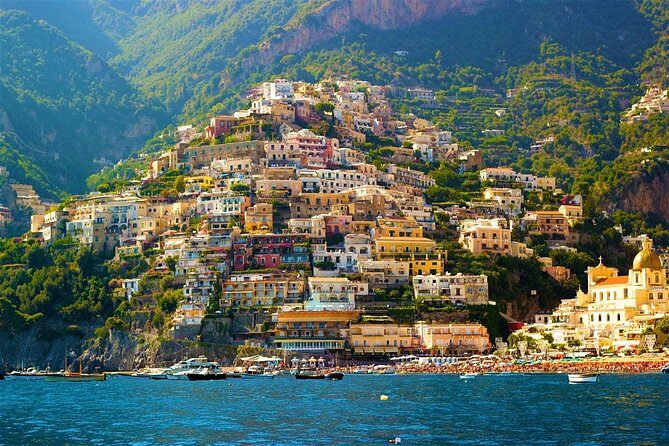
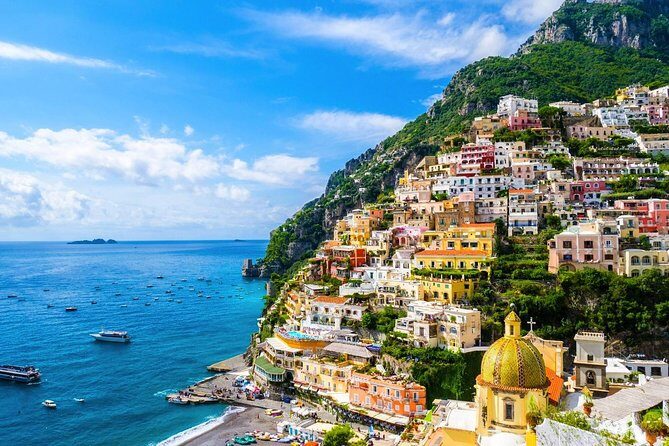
Positano is the postcard you came for. Colored houses cling to cliffs, and the town drops toward the sea in layers. With this tour, you typically get about 2 hours of free time to enjoy it your way—shopping, strolling, and grabbing a drink or meal.
This free-time approach is one of the best parts of the experience. You’re not trapped inside a fixed group flow. You can:
- browse boutiques and shops
- people-watch along the promenade
- take in viewpoints
- walk down toward the beach area
That said, Positano can be physically challenging in the way many cliff towns are. One important heads-up from real-world experience: some drop-offs aren’t close to the best food and beach areas, which can mean a long walk and stairs. If you think you’ll want an easy stroll with minimal climbing, consider wearing shoes you trust on uneven ground.
Also remember: lunch isn’t included. So if you want a specific kind of meal—seafood, vegetarian, budget-friendly—plan your priorities before you arrive, and use the time well.
Want a crowds-smart swap? Positano can become Sorrento
You have a built-in option: Positano can be replaced with Sorrento. If you’d rather avoid the busiest Amalfi-village energy, this swap can be a smart move.
Sorrento is still scenic, still full of shops, and often feels a bit easier to navigate for people who want a relaxed lunch and a stroll without cliff-town stairs dominating every plan. In practice, it can be a great choice if your day feels rushed or if traffic threatens your Positano time.
Some driver-guide teams also suggest additional small stops in the Sorrento area—like a limoncello factory—if that interests you. These are not “must-do” items built into the main schedule, but they can add memorable flavor to your free time.
How the guided Pompeii upgrade changes your day
The private Pompeii guided option is the difference between seeing a site and understanding a city. With a licensed guide, you can get clear explanations of major areas tied to everyday life, like the Forum and thermal baths—the kinds of details that help you picture what locals did day to day.
It also helps with navigation. Pompeii can be crowded, and it’s easy to lose time if you’re backtracking. Guides working with this day-trip format often help you move through the site efficiently, while still adjusting the pace for your group.
One more advantage: “skip-the-line” expectations often come up with this style of service, and guides who coordinate at the entrance can reduce your early-day stress. Just keep in mind that rules and access can vary by day and by site operations, so treat skip-the-line as a possibility—not a guaranteed miracle.
Value check: is €15 Pompeii + a long day worth it?
At $550.09 per person, this is not cheap. But day trips from Rome that include private transport, a full route plan, and the option for a guide do cost real money—especially when you’re traveling far into the Naples-Amalfi orbit.
Where the value tends to show up:
- You avoid transportation stress (and the time loss that comes from transfers).
- You get door-to-door pickup, which matters a lot in Rome.
- Pompeii can be guided, which is often the biggest “value multiplier” for first-time visitors.
- You get real free time at Positano (or Sorrento) instead of a forced group circuit.
Where the price may feel heavy:
- If you’re the kind of traveler who loves to wander mostly on your own and don’t need interpretation, you may end up paying for logistics more than for learning.
- If you dislike long days, the drive time can feel like you’re paying to sit in a van. More than one person notes that the day is long and that it can feel like a lot of driving for the time on foot.
My practical take: if Pompeii is your top priority and you want a low-stress route from Rome, this can be good value. If you want a slow, mostly-walking Amalfi vacation day, you may find a different pace fits better.
Timing tips to protect your best moments
A day like this lives or dies by time management. A few choices can make it feel smoother:
- Be ready at pickup time. If you’re late, the plan can’t always stretch to make up for it.
- Use the morning for mindset, not multitasking. The Castelli Romani context and Montecassino stop help your brain “gear up” for what you’ll see later.
- Treat Positano like a sprint with a pause. Pick one shopping-and-cafe zone and one viewpoint path. Don’t try to cover everything in 2 hours.
- Bring a layer. Coastal mornings and sea air can shift, and buses and vans can be chilly.
- Pack for stairs. Even if you don’t plan to go far down, Positano’s terrain is part of the deal.
If traffic hits, the tour may alter the sequence to reduce congestion, but it aims to still cover the named sights. That flexibility is helpful, but it’s still smart to travel with a calm expectation: the day’s quality is about your priorities, not about checking every possible detour.
Who should book this tour from Rome?
This is a strong pick if:
- You want Pompeii + Amalfi Coast in one day without transportation headaches.
- You like the idea of free time for Positano or Sorrento, not just guided touring.
- You’re okay with an early start and a long day in exchange for convenience.
- You want the Pompeii experience to come with context, using a professional guide when you choose that option.
It may be less ideal if:
- You hate long car rides.
- You want tons of beach time and zero stairs.
- You prefer learning on your own and are unlikely to use the guide upgrade.
If you book, what to do once you’re there
A few small habits make a big difference on a day like this.
In Pompeii, choose a path that matches your interests. If you bought the guided upgrade, let the guide set the rhythm, especially around the Forum and thermal baths themes. If you’re self-guided, use the ruins like chapters: public life first, daily life second, then slow down for whatever grabs you.
In Positano, decide what matters most before you arrive: a meal view, beach time, or shopping. Then spend your 2 hours on that mission. If your drop-off feels far from the best spots, don’t panic—Positano is built for walking, and you can turn that walk into a viewpoint route instead of just a trek.
Should you book this Rome to Pompeii and Positano day trip?
I’d book it if your priority is a stress-free day that hits Pompeii and the Amalfi Coast with private pickup, flexible pacing, and the option to add a Pompeii guide. The combination of logistics plus structured time at the big-ticket stops is exactly what makes this style of tour work.
I would rethink it if you’re sensitive to long drives, or if you’d rather spend more days slowly on the coast. With only about 2 hours in Positano (and time lost to traffic sometimes), you’re trading depth for breadth.
FAQ
What time does the tour start, and how do I get picked up?
Pickup is at 7:30am from your centrally located Rome lodging. You’ll be collected right at the accommodation address.
Is this a private tour or will I share it with others?
It’s a private service, so only your group participates and no one else joins your party.
How long is the day trip?
The duration is about 11 hours.
What’s included in the price?
Included are hotel pickup and drop-off, a private air-conditioned vehicle, and an English-speaking driver. A professional guide is included only if you select the option for one.
Do I need to pay for Pompeii entrance?
Yes. The Pompeii entrance fee is not included (about €15), and the Pompeii Archaeological Park entrance is listed as €15 per person.
Is lunch included?
No. Lunch is not included.
Can I replace Positano with Sorrento?
Yes. The tour notes that your Positano visit can be replaced with Sorrento if you coordinate with the local supplier before you travel.
How much walking is involved?
There’s a moderate amount of walking on uneven ground, especially at Pompeii. Comfortable shoes are recommended.
What if traffic delays the schedule?
High season traffic can reduce the time spent in Positano or Pompeii. The route sequence may be adjusted to avoid congestion, but the tour aims to still cover the mentioned sights.
What’s the cancellation policy?
You can cancel for a full refund up to 24 hours in advance of the experience start time. If you cancel less than 24 hours before, the amount paid is not refunded.