REVIEW · SORRENTO
Pompeii & Amalfi Coast Private Tour: Archaeologist-led, Flexible
Book on Viator →Operated by Fabrizio Belleni - Leisure Italy Private Guide · Bookable on Viator
Pompeii feels close when the guide has a plan. This private, archaeologist-led day pairs in-depth Pompeii walking with a flexible Amalfi Coast route you can adjust as your group likes. I love how the day is built for real time on the ground, not speed-scrolling through ruins. The main trade-off is simple: it’s a long, car-plus-walking day, and Pompeii isn’t ideal if your group has mobility limits.
The guide’s style also matters. Fabrizio Belleni (Leisure Italy Private Guide) is repeatedly praised for calm pacing, clear English, and tailoring stops for families, kids, and even slower walkers. One possible drawback to keep in mind: the day can pack in a lot of highlights, so you’ll want to pick what matters most and let the schedule flex rather than trying to “see everything.”
In This Review
- Key highlights worth planning around
- Pompeii With an Archaeologist in Front of You
- Porta Marina: Your Cinematic Entrance Into Pompeii
- The Basilica and Forum: Roman Civic Life in Plain Sight
- Macellum and Forum Baths: Eat, Buy, and Bathe Like a Local
- The Houses and the Feel of Private Life
- Thermopolium: Pompeii’s Ancient Fast-Food Counter
- Newer Archaeology Vibes: Elevated Walkways at Insula dei Casti Amanti
- Teatro Grande: Roman Entertainment and How the Seating Worked
- Antiquarium di Pompei: The Air-Conditioned Bridge Between Ruins and People
- Sorrento and the Two Scenic Drives: SS145 and SS163
- Positano and Amalfi: Pick Your Vibe, Then Let the Day Flex
- Ravello and Villa Cimbrone: Terrace Views Without the Frenzy
- Optional Stops That Change the Whole Feeling: Minori, Maiori, Erchie, Vietri
- What $540.66 Per Person Buys You (and What to Watch)
- Timing, Heat, and How to Avoid a Tiring Day
- So, Should You Book This Pompeii and Amalfi Coast Private Tour?
- FAQ
- What’s included in the tour price?
- Are Pompeii admission tickets included?
- What language is the tour in?
- How flexible is the Amalfi Coast part of the day?
- Where does the guide pick you up?
- Is lunch included?
- Is Pompeii suitable if we have walking issues?
Key highlights worth planning around
- Archaeologist-led Pompeii focus: more meaning than just pretty ruins.
- Flexible Amalfi Coast itinerary: you choose towns and timing.
- Private pickup and round-trip transport: easy start, less logistical stress.
- Skip-the-line only if you choose the ticket option: plan your ticket choice early.
- Family-friendly guidance: kids and multi-generational groups are handled well.
- Scenic coastal drives (SS145 + SS163): you get the postcard views without doing the driving.
Pompeii With an Archaeologist in Front of You
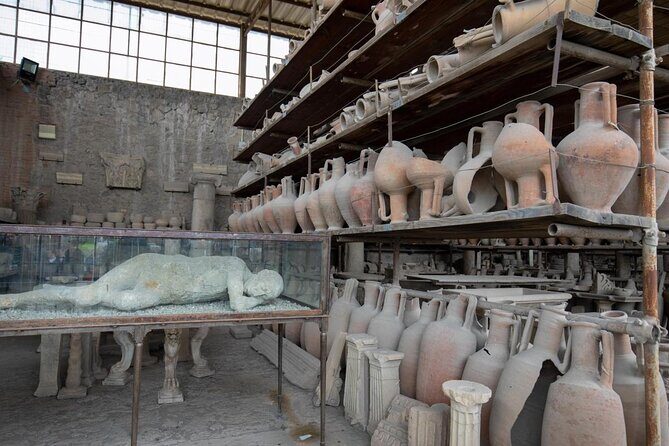
Pompeii works best when someone gives you a way to read the place. This tour is set up for exactly that: a private walking tour in Pompeii with an official guide focused on context, daily life, and how the city functioned before Mt. Vesuvius shut it down.
What makes Pompeii so “wow” here is the preservation. Pompeii was buried under around 20 feet of soft volcanic debris. That layer helped keep street levels and many structures close to how they were, so you can walk past spaces that still feel human-sized, not museum-scale. The most valuable part of the guided approach is that you’re not just looking at stones—you’re being pointed to how Pompeians lived, traded, argued, bathed, ate, worked, and relaxed.
And yes, you’ll still see the big hits. The plan typically includes major public areas like the Forum and civic buildings, but the guide also pushes you toward the residential side—private homes, everyday streets, and shop spaces—where Pompeii stops being a tragedy story and starts being a living city study.
Other private Amalfi Coast tours we've reviewed

Porta Marina: Your Cinematic Entrance Into Pompeii
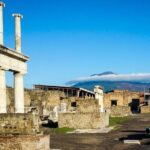
A big first-impression moment is the approach to Porta Marina (the Marine Gate). Instead of a flat, modern-feeling entry, you’ll walk up a steep ramp paved in basalt-like stone, then pass through a massive dual-arched gateway. It’s a dramatic “portal” feeling—one arch side wide enough for pack animals, the other for pedestrians.
Then comes the payoff: as you emerge from the tunnel shadow, the city opens up toward key sights like the Temple of Apollo, the Basilica, and the Forum. The tour also calls out that this entry point connects you toward the Antiquarium museum area and the Suburban Baths, which can help you get your bearings fast and avoid wasted wandering in the early minutes.
One practical note: the start sets momentum. If your group is sensitive to heat or fatigue, you’ll likely benefit from having the guide pace the first hour carefully and keep breaks simple and planned.
The Basilica and Forum: Roman Civic Life in Plain Sight
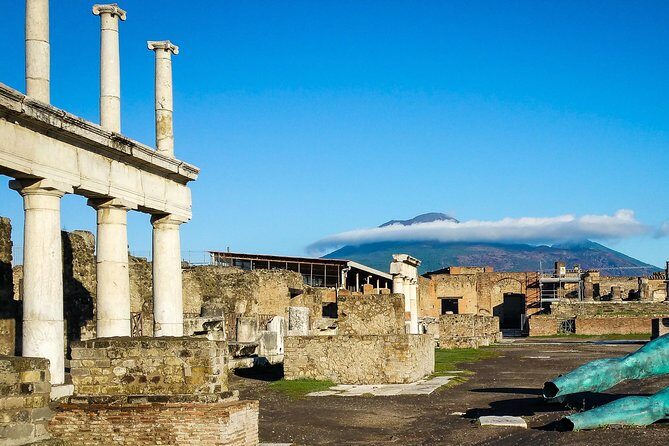
Two of Pompeii’s most important stops are the Basilica Pompeiana and the Forum, and they work together in a really satisfying way.
The Basilica isn’t a church story. You’re stepping into Pompeii’s civic “power building”: a courthouse and commercial exchange. Think of it like legal and business infrastructure rolled into one. The scale is what hits first—remains of huge columns (28 are mentioned in the plan) that once supported a roof are still visible, giving you a sense of how ambitious Roman public engineering could be. You’re also shown how magistrates once worked from a raised podium.
Then the tour shifts into the Forum, which is Pompeii’s political, religious, and commercial center. The Forum is described as a pedestrian-only plaza—the city’s “Times Square” moment—framed by Mount Vesuvius in the distance. The guide points out details like the mensa ponderaria used to verify weights and measures, tying the space to fair trade and everyday commerce.
What I like about this pairing: you’re not jumping between unrelated sites. You’re watching how law, business, and public space fit together in a single walk.
Macellum and Forum Baths: Eat, Buy, and Bathe Like a Local
Pompeii’s daily-life stops are where this tour earns its keep.
At the Macellum, you’re looking at the official covered food market near the Forum. You can trace how the market worked: surrounding tabernae (shops) with a central circular pavilion called a tholos. The tour highlights frescoes linked to food goods, and it even calls out the mensa ponderaria again—because standards and trade weren’t separate from daily life; they were part of it.
The plan also notes plaster casts of victims found through excavations, positioned in this same broader “city function” context. That can feel heavy, but it’s also one of the most human connections Pompeii offers.
Next up is the Forum Baths (Terme del Foro). This is one of the bath complexes still operational in 79 AD, which makes the bathing circuit easier to understand as a full routine: apodyterium (changing room), frigidarium (cold bath), tepidarium (warm room), and calidarium (hot room). You’ll see engineering details like hollow-wall systems (a hypocaust-style hot-air system) and original bronze braziers mentioned in the plan. It’s a reminder that comfort and hygiene were social, not private.
If your group likes practical “how did they live” explanations, these two stops are worth giving extra attention to.
The Houses and the Feel of Private Life
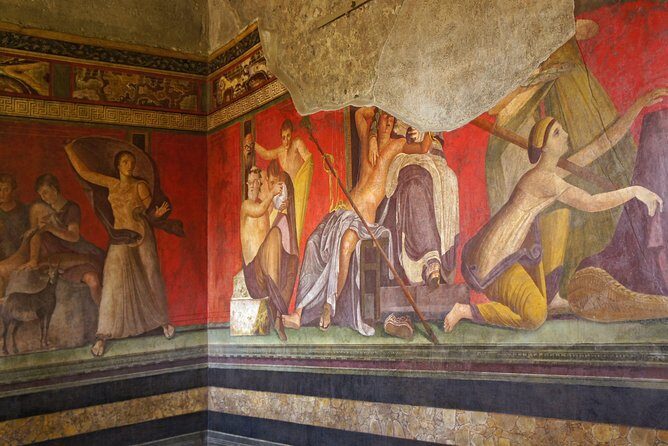
Pompeii’s biggest emotional switch happens when you move from public spaces into private ones.
The tour plan includes the Casa dei Vettii, often described as Pompeii’s “Sistine Chapel” due to its famous frescoes and recent restoration work. It’s a strong choice because you get a complete sense of Roman luxury without needing to guess what you’re seeing. The plan highlights vivid fresco scenes, including a famous entrance painting associated with Priapus and a Room of the Cupids with miniature trade-related scenes. You also get the peristyle garden area, which helps you understand the home as a lived space, not just a decorated room.
This stop is also where the guide’s flexibility can matter. If you’re more interested in daily routine or social status, you’ll likely spend more time around the home’s layout and garden spaces.
Other Pompeii tours we've reviewed



Thermopolium: Pompeii’s Ancient Fast-Food Counter
If you want a stop that breaks up the heaviness of the tragedy story, the Thermopolium is a great one. The plan calls it Pompeii’s “fast-food” counter, with unusually vivid preservation.
You’re shown the L-shaped masonry counter and bright fresco-like decorations—animals and menu visuals—plus the deep terracotta storage jars (dolia). The tour notes that archaeologists found remains in those jars showing a mixed Mediterranean diet: duck, pork, fish, and even land snails, mixed together like an ancient Roman paella.
What makes this stop fun in a smart way is the “this is food for today” feeling. Even if you never think about ancient gastronomy, the presentation helps you connect Pompeii to real-world habits: takeout, quick meals, and visual branding.
Newer Archaeology Vibes: Elevated Walkways at Insula dei Casti Amanti

The plan also includes Insula dei Casti Amanti (Insula of the Chaste Lovers), listed with an innovative feature for 2026: elevated walkways that let you look down over an active excavation from above. That’s a rare way to see archaeology as it happens, rather than only seeing completed end results.
This area is tied to a recognizable theme in its fresco decoration (including a scene associated with a kiss during a banquet, as stated in the plan), but the stop also points to childhood traces through charcoal sketches found on walls and a nearby bakery area, plus remains of victims. For some groups, it’s a “history is being recovered in real time” kind of moment.
If your group enjoys modern excavation methods and not just finished ruins, this stop can be a highlight.
Teatro Grande: Roman Entertainment and How the Seating Worked
The Teatro Grande stop brings Pompeii’s social side into focus. You’re looking at one of the earliest stone theaters, dating back to the 2nd century BC, with a horseshoe shape and strict seating hierarchy. The plan notes marble seats for elites and sections for common people.
Then there’s the famous acoustics angle. The plan states you can hear even a whisper from the center of the stage all the way to the top rows, with about 5,000 seats mentioned. Even if you don’t test it theatrically, that acoustic idea helps you picture how performances would have felt.
It’s also visually satisfying because the theater sits against dramatic views with Mount Vesuvius in the backdrop.
Antiquarium di Pompei: The Air-Conditioned Bridge Between Ruins and People
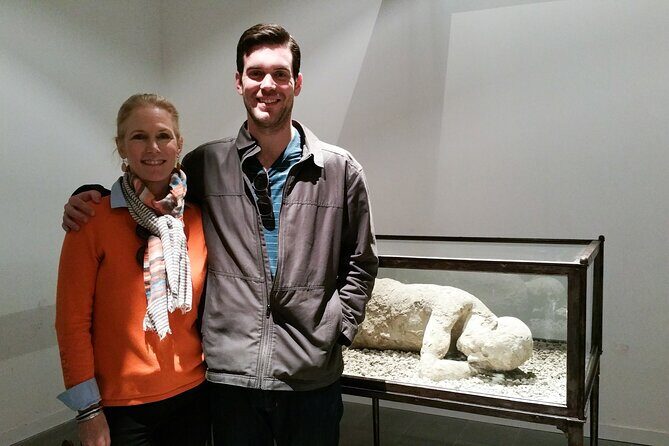
Before or after your walking circuit, the tour includes the Antiquarium di Pompei, described as a key starting point because it introduces treasures and fragile finds in a controlled indoor setting.
In practical terms, it’s also a nice climate reset. The plan calls it air-conditioned and highlights precious objects, plus modern displays and digital media features mentioned for 2026. Most importantly for emotional impact, it’s where the famous plaster casts of victims and animals are housed, giving you a direct human connection.
This is a good place for your group to regroup, especially if you’ve been in strong sun outside.
Sorrento and the Two Scenic Drives: SS145 and SS163
Once Pompeii is handled, the rest of the day shifts to scenery and towns, and that part is often where people remember the trip even more than the calendar details.
The plan includes the SS145 “Sorrentina” road, described as a dramatic coastal route connecting the Bay of Naples to the Sorrento Peninsula. Expect sweeping curves, tunnels, and bridges, plus views of turquoise water, Vico Equense and Meta, and Mount Vesuvius across the water. Lemon groves and watchtowers along the way add a “this coastline is real” feeling, not just a postcard.
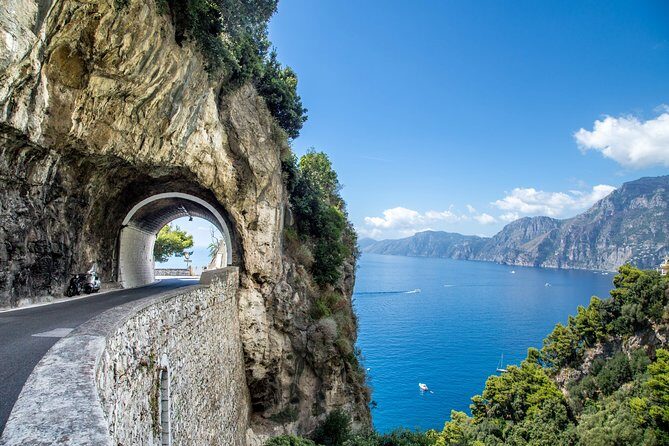
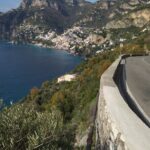
Then you hit the SS163 Amalfi Drive, the famous cliff-hugging route carved directly into rock. The plan frames it as hair-raising but spectacular, with views of Positano, terraced lemon groves, and water far below. This is also where having a guide matters: you’re not trying to navigate tight turns or parking while also trying to read the scenery.
For many groups, the drive is the decompress button between Pompeii and the next stops.
Positano and Amalfi: Pick Your Vibe, Then Let the Day Flex
The schedule includes time in Sorrento as a base and warm-up. Sorrento is described as perched above the Bay of Naples, with viewpoints, the Piazza Tasso, and a walkable old center. The harbor (Marina Grande) is also mentioned as a place to go for seafood.
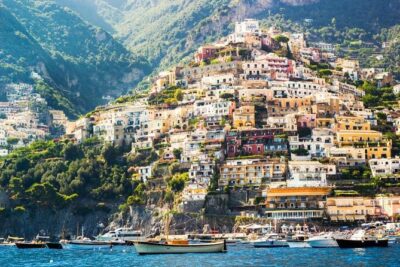
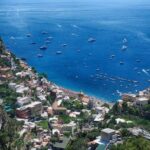
From there you’ll likely go to Positano, described as the vertical jewel of the coast with pastel houses dropping toward the sea. The tour highlights the narrow alleys, bougainvillea, and the Church of Santa Maria Assunta with its iconic tiled dome. Positano works well if your group wants photo stops and easy strolling without needing a ticketed attraction.
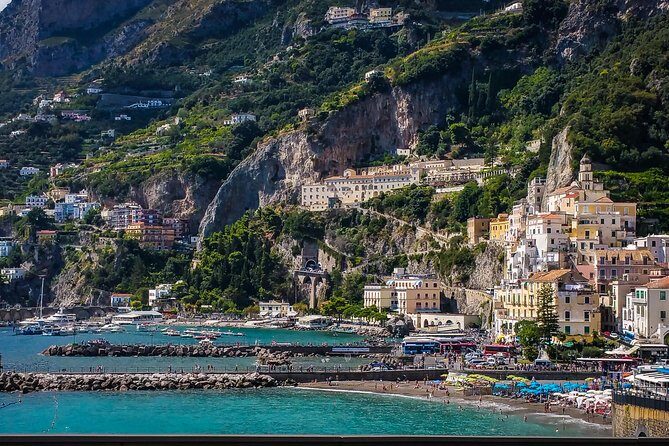
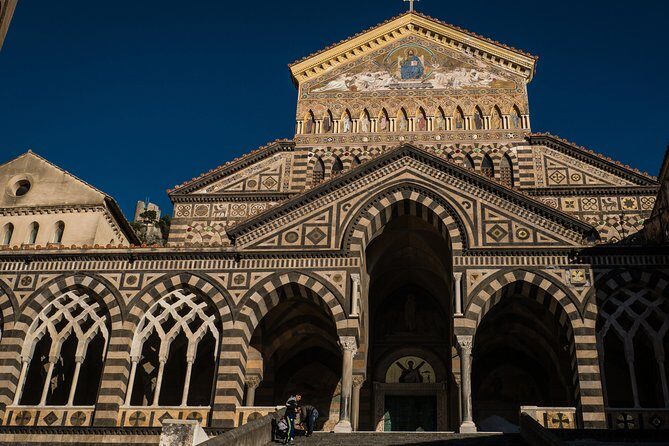
Then comes Amalfi, the historic heart. The plan emphasizes the Duomo di Sant’Andrea with its striped Arab-Norman-style facade and an 11th-century bronze door from Constantinople. It also notes the 62-step staircase and the layered interior history. If you want a cultural anchor rather than only views, this is the stop.
Amalfi also includes the small “vicoletti” alleys and the Paper Museum mention. If your group likes hands-on crafts or history that feels everyday, this can add variety.
Ravello and Villa Cimbrone: Terrace Views Without the Frenzy
If you want your Amalfi day to slow down, the plan includes Ravello, described as quiet and high above the coast. Ravello is the kind of stop where you feel the air cool slightly because you’re up on that balcony over the sea.
Two major anchors are Villa Rufolo and Villa Cimbrone, with Villa Cimbrone gardens calling out the Terrace of Infinity viewpoint. The plan states it looks like it’s floating between sea and sky and sits about 1,200 feet above the water. That’s the kind of sight your group will talk about later, even if nobody remembers the name of the villa.
This is also a place for classic garden strolling—cloister areas, statues, themed garden sections—so it works even if your group isn’t trying to “do” another museum.
Optional Stops That Change the Whole Feeling: Minori, Maiori, Erchie, Vietri
Here’s where flexibility becomes more than a feature—it becomes the difference between seeing a coast and experiencing it.
The route can include smaller towns beyond the big names:
- Minori: called the city of taste, with Sal De Riso pastry shop and Villa Romana Marittima with mosaics and frescoes mentioned in the plan. It also includes Basilica of Santa Trofimena.
- Maiori: known for a longer sandy beach and a palm-lined promenade. The Collegiate Church of Santa Maria a Mare and the castle viewpoint are part of the plan, plus the Path of the Lemons option and the Pandora Grotto by boat mentioned.
- Erchie: described as a quieter fishing hamlet between two Saracen watchtowers, with a sheltered pebbly beach and a more peaceful feel.
- Vietri sul Mare: framed as the ceramic gateway, with bright majolica shopfronts and the Church of San Giovanni Battista noted for its tiled dome.
You’ll be happiest here if you pick what fits your group. If you want classic Amalfi glamour, stick closer to Positano and Amalfi. If you want a more relaxed day, leaning into Minori/Maiori/Erchie can make the trip feel less “tour bus, repeat.”
What $540.66 Per Person Buys You (and What to Watch)
At $540.66 per person, this isn’t a budget day. The value is mostly in three places:
1) Private transport and pickup
You’re not arranging trains, transfers, or juggling drivers. Round-trip transport is included, and you also get bottled water and WiFi on board.
2) A guide who tailors pacing
This tour is repeatedly described as flexible—Fabrizio adjusts the day based on interests, family needs, and time limits. Reviews also mention he helped people manage heat and walking speed across generations.
3) Pompeii done with real explanation
Pompeii is where a guided approach pays off. The sites are spread out, and without context it’s easy to only remember walls and columns. With the guide’s focus on daily life, public buildings, and how the city worked, you keep more.
One more key cost detail: Pompeii admission fees are not included unless you select the tickets-included option. If you don’t, the plan states Pompeii admission is €19 per person and free for kids. That means your total cost can vary based on your ticket choice.
Lunch also isn’t included. The good news is that the guide arranges it on request. One review highlights how Fabrizio found freshly made gluten-free pasta at a restaurant near the Pompeii entrance—exactly the kind of practical problem-solving that’s hard to do on your own.
Timing, Heat, and How to Avoid a Tiring Day
This is an all-day plan: Pompeii in the morning/early part, then drives and coastal towns afterward, totaling about 8 to 9 hours.
The most practical advice I’d give you: treat your schedule like a temperature tool. Pompeii can get hot fast. One review mentions Fabrizio recommended waiting until afternoon for a breeze, and it worked out better than their original plan. You don’t need to copy their timing, but you should listen when the guide suggests adjustments based on the day’s weather.
Also, ask yourself what kind of walking your group tolerates. The tour says moderate physical fitness is recommended, and visiting Pompeii isn’t recommended for those with walking issues. With private touring, you can often slow down, but you can’t eliminate Pompeii’s uneven ground.
So, Should You Book This Pompeii and Amalfi Coast Private Tour?
If your top goal is Pompeii with real context, plus an Amalfi day that doesn’t feel trapped in a fixed bus itinerary, I think this is a strong choice. It’s especially worth booking if you’re traveling with kids, a multi-generational group, or anyone who needs pacing and clear planning.
Skip it only if your group has significant walking restrictions in Pompeii or you want a totally free-form, no-transport arrangement. Pompeii is the heart of this day; make sure your group can enjoy it comfortably. If you can, this is the kind of private tour that turns a famous place into a story you actually understand.
FAQ
What’s included in the tour price?
The price includes a private transportation pick-up and drop-off, bottled water, WiFi on board, and a private walking tour in Pompeii with an official guide. Admission fees for Pompeii are included only if you select the tickets-included option at booking.
Are Pompeii admission tickets included?
Not automatically. If you do not choose the tickets-included option, Pompeii admission fees are €19 per person (free for kids), according to the provided details.
What language is the tour in?
The tour is offered in English.
How flexible is the Amalfi Coast part of the day?
The Amalfi Coast itinerary is customized to suit your group’s requests, and the Pompeii part is also described as tailored on your demands.
Where does the guide pick you up?
Pickup is available in Naples, Sorrento, Positano, or Pompeii. The port, airport, or railways in Naples are not a problem. Pickup in Amalfi or Ravello is possible for an additional charge.
Is lunch included?
No. Lunch is not included, but you can ask for recommendations and different choices.
Is Pompeii suitable if we have walking issues?
The tour notes that Pompeii is not recommended for those who have walking issues, and travelers should have moderate physical fitness.