REVIEW · NAPLES
Transfer from Naples to Positano with 2 hours Private Tour in Pompeii
Book on Viator →Operated by Askos Tours · Bookable on Viator
Two cities, one ancient stop. This private transfer from Naples to Positano folds in a guided walk through Pompeii, so you’re not wasting your day on tickets and transfers. I like the Pompeii Archaeological Area admission included, and I also like that you get help from a real guide for the key sights.
A second thing I really like: the tour is built around short, purposeful stops—so you get the big themes (market life, public spaces, daily homes) without feeling lost. Plus, pickup is set up for real life in Naples, with the driver meeting you at the airport, central station, or your accommodation.
One possible consideration: timing is tight (about 4 hours total), and the vehicle may not always match what you expect from the word minivan—so if you have lots of luggage, confirm before you go.
In This Review
- Key highlights at a glance
- Naples to Positano, with Pompeii handled in one plan
- Price and what you get when you pay per person
- Pickup in Naples: how the day starts smoothly
- Where you meet inside Pompeii: Porta Marina Superiore
- Pompeii at a fast, human pace: what each stop is for
- Stop 1: Pompeii Archaeological Park (main entrance)
- Stop 2: The Basilica (covered portico life)
- Stop 3: Foro de Pompeya (Pompeii’s main square)
- Stop 4: Walk through the main street
- Stop 5: Granai del Foro (granaries, marble tables, baths, casts)
- Stop 6: Casa del Menandro (a rich house with standout decoration)
- Stop 7: Stabian Baths (Terme Stabiane, oldest thermal complex)
- Stop 8: Lupanar (the famous brothel)
- Stop 9: Casa del Fauno (large, impressive residence)
- A quick look: Teatro Piccolo
- Stop 10: Teatro Grande (the main theater)
- Transfer comfort: the practical part people forget
- Who this Pompeii + Positano plan is best for
- Should you book this Naples to Positano with Pompeii stop?
- FAQ
- How long is the Pompeii and transfer experience?
- Is this tour private?
- Where does pickup happen in Naples?
- What is the meeting point inside Pompeii?
- What’s included in the price?
- Is Pompeii admission included?
- What language is the guide?
- Are meals included?
- What is the cancellation policy?
- Are car seats available?
Key highlights at a glance
- Pompeii admission included, plus a guided route that hits the main anchors fast
- Pickup options in Naples: airport, Central Station (NAP), or your hotel
- English guidance with assistance during your Pompeii visit
- Structured stops at places like the Foro, Stabian Baths, and Teatro Grande
- Private format: only your group, with a name-sign driver
- One-way transfer to Positano, with hotel drop-off included
Naples to Positano, with Pompeii handled in one plan
If your Naples days are already packed, this is the kind of tour that saves you from decision fatigue. You start in Naples, get transported comfortably, and still get Pompeii’s main sights with a guide doing the heavy lifting of navigation and interpretation.
The value here is not just that Pompeii is included. It’s that the experience is designed to fit into a transfer day—so you leave Pompeii knowing what you saw, then roll right into Positano without re-planning your logistics.
And because it’s private, you’re not stuck waiting while other groups wander off in search of the nearest snack stand.
If you're still narrowing it down, here are other tours in Naples we've reviewed.



Price and what you get when you pay per person
At $467.63 per person, this isn’t a budget option. But you’re paying for three things at once: a private air-conditioned vehicle, a guided Pompeii visit with admission included, and a one-way transfer to Positano with hotel drop-off.
For some travelers, that cost makes sense because it replaces multiple purchases and coordination headaches: separate transport, separate guide time, and separate entry handling. For others, it will feel steep if you’re traveling alone or if you’re the kind of person who enjoys slow, self-guided wandering without structure.
My practical advice: if you’re traveling with at least one other person, the per-person cost usually feels less painful, because the private logistics cost is spread across your group while admission and guide time stay the same.
Pickup in Naples: how the day starts smoothly
Your day begins in Naples. You can be picked up at the airport, at Central Station (NAP), or from your accommodation. The driver will hold a sign with your name, which is a small thing that matters when you’re juggling bags, a tight schedule, and new surroundings.
The vehicle is described as a private air-conditioned minivan, but one review noted it was actually a sedan. That doesn’t ruin the tour, but it can affect comfort and luggage space. If you’re bringing multiple suitcases, confirm the vehicle type and capacity before you lock in your plans.
Two more helpful details: car seats are available on request, and service animals are allowed. Also, you’ll receive confirmation at booking time, and you’ll use a mobile ticket.
Where you meet inside Pompeii: Porta Marina Superiore
Once you arrive, you meet your guide at the main entrance called Porta Marina Superiore. This matters because Pompeii is big, and the difference between arriving at the wrong gate versus the main entrance can add stress.
From there, the itinerary moves fast but not randomly. Each stop is chosen to explain a different slice of life in Pompeii, and the guide helps you connect the dots—so the ruins feel like a place that once had routines, not just stone outlines.
Pompeii at a fast, human pace: what each stop is for
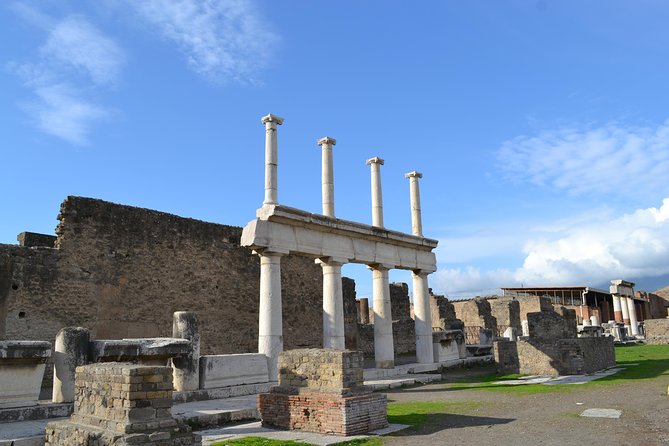
This is the part that makes the tour work for short on-time Italy schedules. You’re not spending all day in Pompeii. Instead, you’re touring the public core and major house highlights, with quick context at each point.
Expect a series of short visits—often around 10 to 15 minutes each—plus walking time between areas. That structure is helpful if you’re worried you’ll spend hours just trying to figure out where to go next.



Stop 1: Pompeii Archaeological Park (main entrance)
You start at the entrance, and admission to the Pompeii ruins is included. This gives you the simplest possible start: no extra ticket scramble, no uncertainty about where to line up.
A real benefit of guided entry is that you get oriented quickly. Pompeii can feel overwhelming at first, especially if you come in on your own and need to build the map in your head.
Stop 2: The Basilica (covered portico life)
The Basilica is described as an open portico that sheltered merchants and other activities. In practice, this is one of the best places to understand how business and community life fit together in the city.
Even in a short stop, you’ll likely get the key idea: Pompeii’s public architecture wasn’t only for show. It shaped how people traded, met, and handled daily work.
Stop 3: Foro de Pompeya (Pompeii’s main square)
The Foro is Pompeii’s main square—the place where you’d expect political conversation, commerce, and public announcements. This is where the city feels most “town-like,” because it’s the center of gatherings rather than private interiors.
It’s also a good mental anchor. Once you’ve seen the Foro, the rest of your walk through Pompeii starts to make more sense.
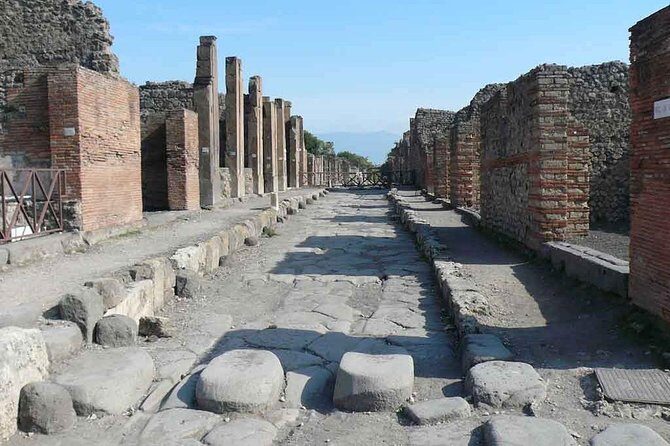
Stop 4: Walk through the main street
You’ll walk through the main street afterward. This section is less about a single highlight and more about pacing yourself through the city’s layout.
Think of it as the connective tissue. Even if you want more time in each area, this walk helps you understand how people moved through Pompeii day-to-day.
Stop 5: Granai del Foro (granaries, marble tables, baths, casts)
Granai del Foro is where the tour gets wonderfully specific. You’ll see marble tables, baths for fountains that adorned house entrances, and casts of victims of the eruption—along with a dog and a tree.
This stop gives you a clearer emotional picture of Pompeii. The casts are what make the story feel immediate, while the marble details remind you that even everyday spaces had craftsmanship.
If you’re sensitive to the subject matter of the casts, this is a good stop to mentally prepare for. It can be moving, and it’s not a quick “photo and move on” moment for everyone.
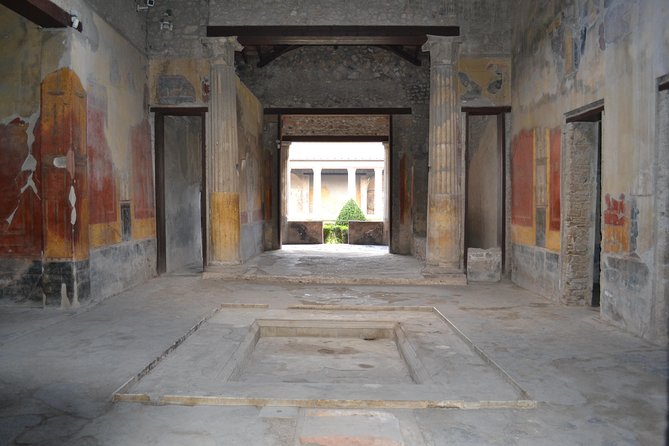
Stop 6: Casa del Menandro (a rich house with standout decoration)
Casa del Menandro is one of the richest houses in ancient Pompeii, known for architecture, decoration, and contents. In a short tour like this, a house visit is your shortcut to understanding how wealth and art showed up in daily life.
You’ll likely get context that helps you see the scale and finish of the home, rather than just looking at walls and guessing what they meant.
One practical note: house sections can have uneven footing and open-air movement, so wear shoes you trust.
Stop 7: Stabian Baths (Terme Stabiane, oldest thermal complex)
The Stabian Baths cover a vast area and are described as the oldest thermal complex in the city. Bathrooms and bath culture might sound like a topic you can skip, but in Pompeii they reveal how Romans handled health, leisure, and social time.
This is a great stop if you like “real life” details. Baths were not just about cleanliness; they were about meeting people, relaxing, and keeping routines.
Stop 8: Lupanar (the famous brothel)
The Lupanar is visited as Pompeii’s most famous brothel. It’s a provocative stop, and it’s also one that teaches you how commerce and morality tangled in the Roman world.
For many visitors, this is also one of the most talked-about stops afterward because it makes Pompeii feel uncomfortably human. Your guide’s interpretation will shape how you experience it—so listen carefully, not just for facts, but for what the site suggests about social life.
Stop 9: Casa del Fauno (large, impressive residence)
Casa del Fauno is one of the largest and most impressive private residences. This stop is where you get a sense of how status was built into space: size, layout, and visual details.
Even if you don’t catch every decorative element in a short visit, you’ll come away with a stronger sense of the “home as symbol” idea.
A quick look: Teatro Piccolo
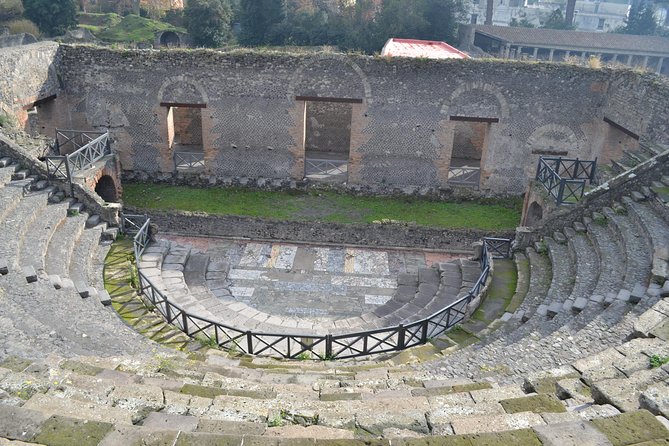
You’ll have a look at Teatro Piccolo. It’s not the final theater focus, but it helps show that Pompeii had more than one performance space.
This is one of those stops that feels small but makes the city more complete—because a city with only one theater would still be interesting, while Pompeii had a fuller arts scene.
Stop 10: Teatro Grande (the main theater)
Teatro Grande is the important theater in Pompeii, and the tour gives it time for a real visit. The theater is where public entertainment, social gathering, and architecture meet.
Your guide will also show you additional context like the house of Tragic Poet and famous plaster casts. So you’re not just looking at a performance space—you’re tying theater life to the broader eruption story.
This final chunk is the best “wrap-up” section. By the time you reach Teatro Grande, you’ve already seen the public spaces and several major homes, so the theater lands with more meaning.
Transfer comfort: the practical part people forget
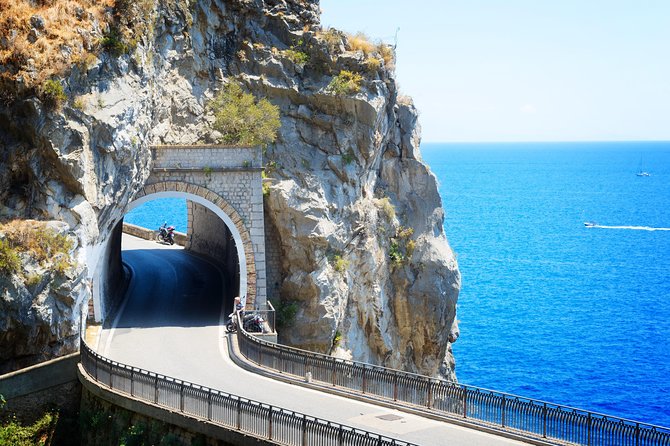
Transport is included and you travel by private air-conditioned vehicle. You’re picked up in Naples, and your day ends with a one-way transfer to Positano and hotel drop-off.
For many visitors, the real win is that you don’t have to coordinate a separate transfer after Pompeii. Pompeii can take it out of you. Having the driver handle departure keeps the day from turning into a scramble.
The one thing to double-check is vehicle size. The tour description can say minivan, while one reported experience noted a sedan instead. If your luggage needs more room, confirm capacity so you don’t end up playing luggage Tetris mid-journey.
Who this Pompeii + Positano plan is best for
This tour fits best when you want Pompeii without turning your entire trip into an endurance event. It’s ideal if you’re short on time and you still want real guidance in the ruins.
It’s also a good match for:
- First-timers to Pompeii who want the main stops in one go
- Couples and small groups who value convenience over wandering
- People who prefer an organized route when they land in Naples with little buffer time
If you love slow museum-style pacing—spending a long time staring at one mosaic—this may feel too structured. But if you want clarity and coverage, it’s built for you.
Should you book this Naples to Positano with Pompeii stop?
I’d book it if Pompeii is on your must-do list and you want it handled cleanly as part of moving to Positano. The big reason is that admission and guided interpretation are included, and the day is organized around Pompeii’s key anchors without wasting time on guesswork.
I’d think twice if your schedule is flexible in a way that lets you go slower on your own, or if you have heavy luggage and need a specific vehicle type—because you should confirm whether it’s actually a minivan or a smaller car.
For most time-crunched travelers, though, this strikes a smart balance: a guided Pompeii highlight route plus a stress-free transfer to Positano.
FAQ
How long is the Pompeii and transfer experience?
The duration is approximately 4 hours.
Is this tour private?
Yes. It’s a private tour/activity, and only your group participates.
Where does pickup happen in Naples?
Pickup is offered at the airport, Central Station (NAP), or your accommodation in Naples.
What is the meeting point inside Pompeii?
You meet the guide at the main entrance of Pompeii ruins called Porta Marina Superiore.
What’s included in the price?
Included are private transport by air-conditioned minivan, a one-way private transfer from Naples to Positano with hotel drop-off, Pompeii guide assistance, all taxes, and admission fees to the Pompeii ruins.
Is Pompeii admission included?
Yes. Admission to Pompeii’s Archaeological Area is included.
What language is the guide?
The tour is offered in English.
Are meals included?
No. Meals are not included.
What is the cancellation policy?
Free cancellation is available up to 24 hours in advance for a full refund.
Are car seats available?
Car seats are available on request.