REVIEW · NAPLES
Sorrento, Positano and Amalfi Coast in One Day From Naples
Book on Viator →Operated by CiaoNaples - Tours & Excursions · Bookable on Viator
One day, five cliff towns, unforgettable sea views. This one-day Naples outing strings together Meta, Sorrento, Positano, Furore, and Amalfi with live commentary so the scenery comes with context, not just photos. It’s the kind of route that makes you understand why the Amalfi Coast is famous before your shoes even touch the last street.
I really like two things about this tour: first, the live English commentary on board gives you quick, usable background as you travel between towns. Second, you get a fair chunk of time in the main stops, including 1.5 hours in Sorrento and 1.5 hours in Amalfi, so you’re not only looking from the road.
The main downside is simple: it’s a long day at 8 to 9 hours, and the coast moves fast. If you love slow lunches and lingering in one place, this schedule may feel a bit tight.
In This Review
- Key highlights at a glance
- A fast, smart route from Naples to the Amalfi Coast
- Meta stop: the quick peninsula preview you’ll appreciate later
- Sorrento’s Piazza Tasso and Corso Italia in 90 minutes
- Positano and the “stacked town” effect from the sea
- Gallo Lungo islets: a brief nature stop with Roman clues
- Furore: a UNESCO fjord village that changes the pace
- Amalfi with time to walk: legends, Roman origins, waterfront energy
- What makes this tour feel worth it: $153.78 and the hidden value
- The people factor: Chiara and Mario’s impact on a tough road day
- Tips to enjoy the day instead of rushing it
- Who should book this one-day Naples coast tour?
- Should you book this one-day Amalfi Coast sampler?
- FAQ
- How long is the tour?
- What does it cost?
- Is the tour offered in English?
- What’s included in the price?
- What’s not included?
- How big is the group?
Key highlights at a glance
- Short orientation in Meta before you reach the bigger, showier towns
- Real time in Sorrento (about 1.5 hours) around Piazza Tasso and Corso Italia
- Positano and the cliff-town feel: houses stacked on steep steps, with sea views built in
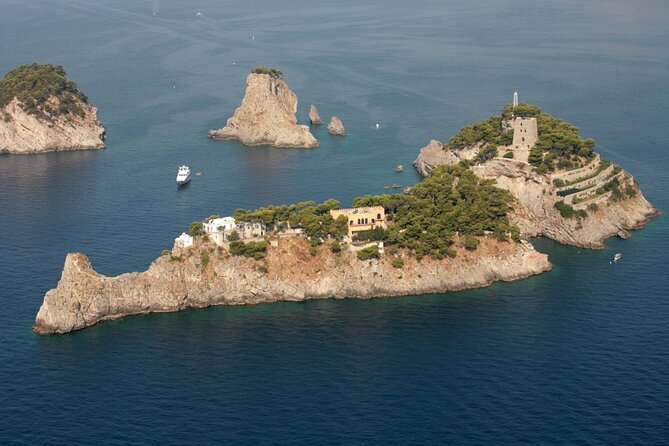
- Gallo Lungo and nearby islets: Roman-era habitation plus a nice dose of nature and daffodils
- Furore’s UNESCO-style valley village and a fjord view that changes the pace
- Amalfi for the finishing stretch with time to walk and absorb the waterfront atmosphere
A fast, smart route from Naples to the Amalfi Coast
This is a classic “highlights” day. You’re not trying to conquer every street; you’re getting the signature feel of the coast: steep towns, sea views, and that sense that each village grew on top of the previous one.
You’ll ride in an air-conditioned vehicle with live commentary in English. That matters on the Amalfi Coast, because the road curves all day and it’s easy to miss what you’re actually seeing. With commentary, you get names, legends, and practical orientation so you don’t feel like you’re just being transported.
It also helps that the group cap is 19 and the tour needs at least 4 people. In real terms, that usually means less time waiting than with huge buses, and it’s easier to move when you arrive.
If you're still narrowing it down, here are other tours in Naples we've reviewed.
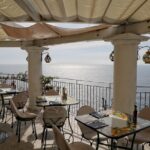
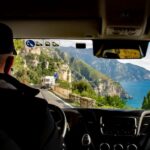
Meta stop: the quick peninsula preview you’ll appreciate later
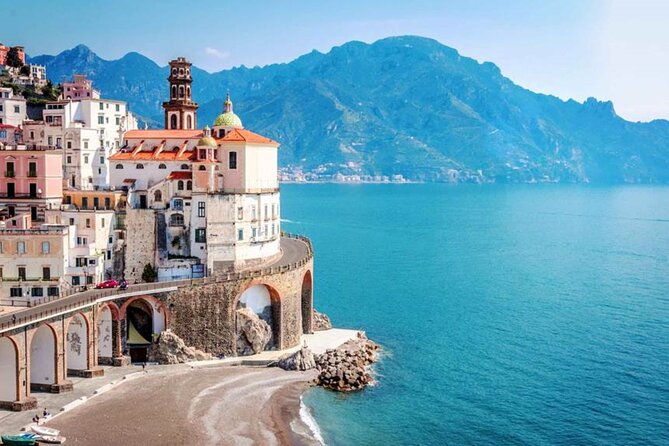
Meta is one of the smaller municipalities on the Sorrento peninsula, and the tour’s brief stop here works like a warm-up. It sits along the Gulf of Naples, and it’s positioned as the second municipality on the peninsula coming from Naples, after Vico Equense. Even in a short window, you’re getting a sense of how quickly the coastline starts rising into hills.
Meta is described as being split in local tradition into Meta above and Meta below. Above is the more inner, tree-covered area. Below is the area facing the coast. That simple idea helps you notice the geography as you roll on—because later, when you reach Sorrento and then Positano, you’ll feel that same vertical layering.
The stop is only about 5 minutes and admission is free, so treat it as a quick orientation moment. Don’t expect a deep wander. Instead, use it to reset your brain for the day’s pattern: road, viewpoint, town steps, repeat.
Sorrento’s Piazza Tasso and Corso Italia in 90 minutes
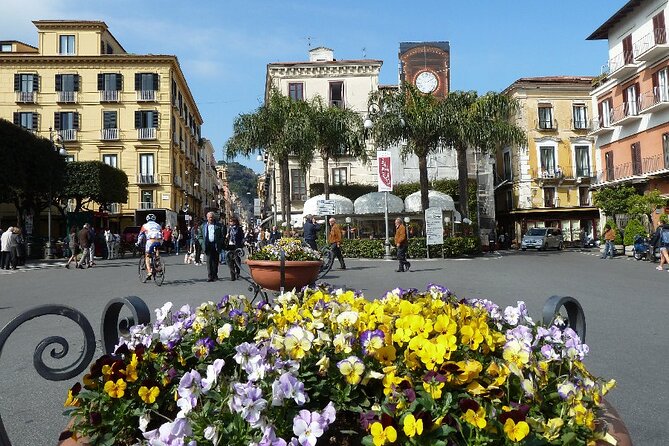
Sorrento is the calm, charming half of the day before Positano’s steep drama. The city sits on a tufa terrace above the sea, with the Gulf of Naples unfolding below. And you can feel it right away once you get oriented around Piazza Tasso and Corso Italia.
Corso Italia is also where you’ll find the Duomo. From there, narrow streets radiate toward the sea, and that’s where the town’s character shows up: shops in tight lanes, quick glimpses down toward the water, and a relaxed pace that fits the half-day rhythm.
What I like about this stop is that Sorrento isn’t just a pretty face. It has Greek roots, then moved under Roman domination, and today the whole town seems organized around sea views, parks and gardens, and the citrus-grove vibe the area is known for.
Your best use of the 1 hour 30 minutes is to do two things without over-planning:
- Spend time near Piazza Tasso / Corso Italia to get your bearings fast
- Walk toward the Villa Comunale viewpoint, where you can see the port and the whole Gulf of Naples
Because time is limited, pick one viewpoint mission and stick to it. You’ll come back energized, not exhausted.
Positano and the “stacked town” effect from the sea
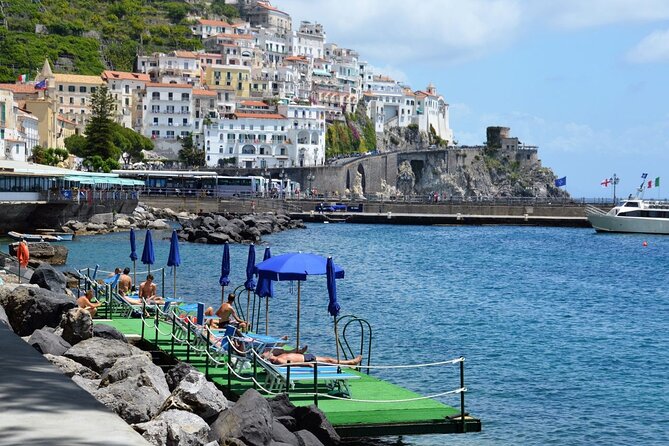
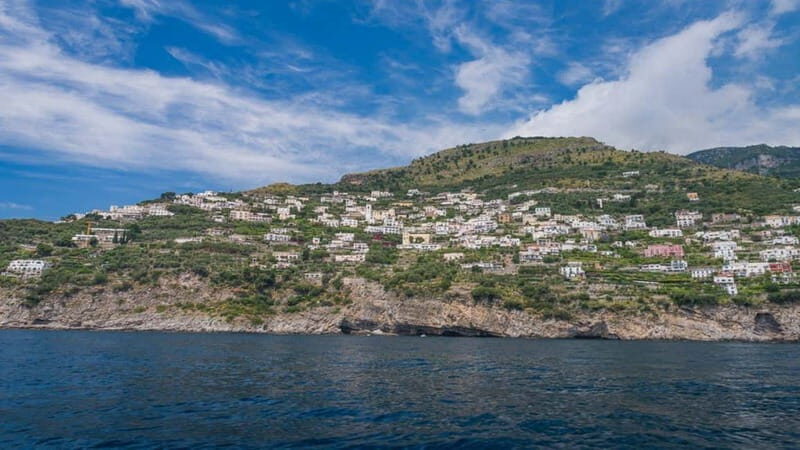
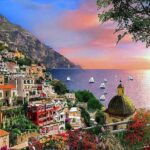
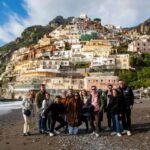
Positano is the headline. The town is described as spontaneous architecture built directly into the rock, with colorful houses stacked on steep steps that descend toward the beach area. Even if you’re only walking for about 1 hour, the place makes an impression because the layout forces you to experience it vertically.
The tour timing here is tight but workable if you move with purpose. Aim to spend your first minutes taking in the big view from above (the coastal road approach is known for sudden panoramic moments), then go find a lane where the stair-step scenery frames your photos and your breath.
One cool detail to keep in mind: the tour background links Positano to Roman-era villas built for leisure along the coast. The name is connected to a villa tied to Posides Claudi Cesaris, a freedman of Emperor Claudius, and the place stretched from that villa name across the area. When you know that, you’re less likely to treat the town as only a postcard.
Also, Positano’s tight streets are part of the charm and part of the challenge. You can’t do everything in an hour. So don’t try to “check off” shops and viewpoints. Pick the vibe you want: sea views from above or strolling through the lanes.
Gallo Lungo islets: a brief nature stop with Roman clues
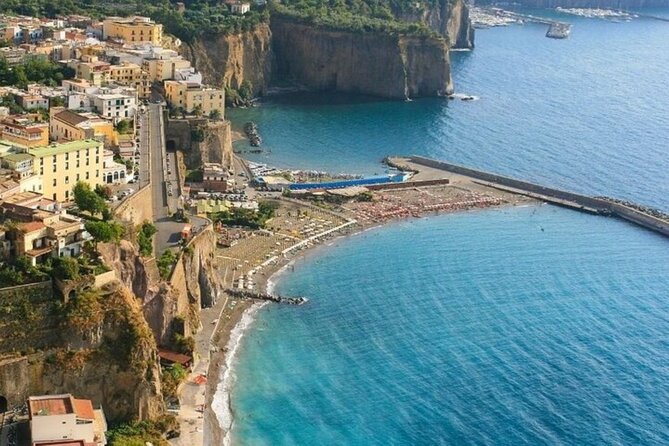
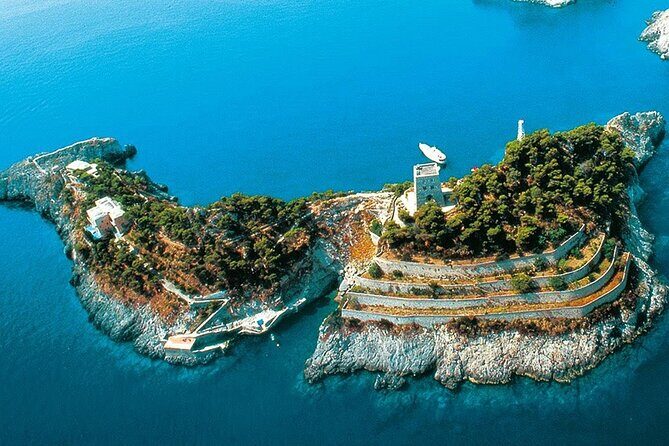
Between Sorrento and Positano, the route includes a stop connected to the islets near Positano, especially Gallo Lungo. This is where the day gets a little unexpected, in a good way.
Gallo Lungo is described as the largest of three islets, and it’s the only one said to have been inhabited since Roman times. It has an elongated shape, extending about 400 meters, with a variable width. To the west are La Rotonda and Dei Briganti, and the north islet is sometimes referred to as La Castelluccia in other sources.
The islets are covered with grass and shrubs, and there’s mention of daffodils. That mix of nature and old habitation makes this short stop feel meaningful rather than random. Use it for a photo and a moment of stillness before Positano’s stairs take over.
Even if you only get a brief window, you’ll leave with a better sense of why this coastline looks the way it does: water, cliffs, and small pieces of land that have mattered for centuries.


Furore: a UNESCO fjord village that changes the pace
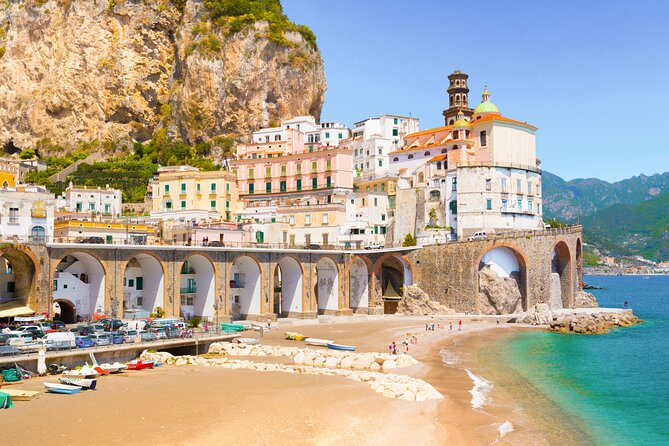
Furore is where the day shifts gears. Instead of the big-name coastal towns, you get a village described as one of the most picturesque on the Amalfi Coast and noted as a UNESCO World Heritage Site.
Furore is best known for its striking fjord. But the village itself is what makes it memorable: houses cling to the slopes in a deep valley, almost like a nativity scene that has stayed intact over time. They’re wedged between overhanging rocks and vegetation climbing up rock walls.
If Sorrento and Positano are about views you see from above and then stairs you descend, Furore is about a valley you look into. It’s a change of perspective, and that helps you enjoy the day instead of just collecting towns.
It’s also home to Fiorduva, mentioned as one of the appreciated wines in the world. The tour data doesn’t spell out tastings or shop stops here, so don’t plan on a full wine experience. But it does explain why local agriculture and production are part of the identity of this spot.
In practice, use Furore as your reset: take a slower walk, enjoy the valley setting, and don’t feel you need to speed through.
Amalfi with time to walk: legends, Roman origins, waterfront energy
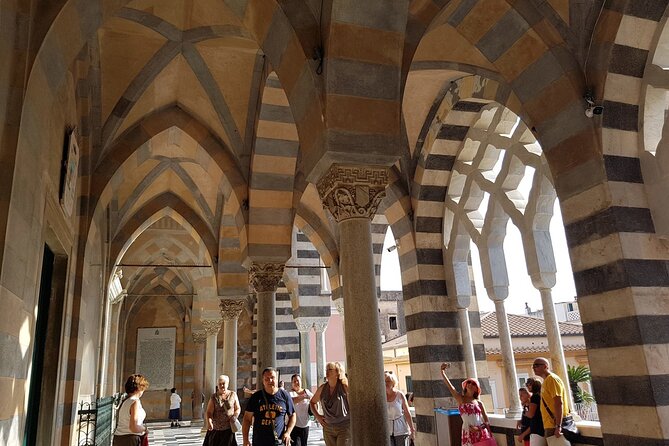
You finish in Amalfi, another major name on the coast, but with a different personality. Amalfi is surrounded by legends about its founding, and those stories tie back to Roman origins.
The tour notes archaeological traces of an imperial-era villa, including a nymphaeum likely from the time of Emperor Tiberius. There’s also wordplay around the town name Amalfi, linked to Latin roots and traditions involving Roman refugees and older maritime places.
Even if you don’t connect to legends, Amalfi works because it’s built for sea-facing views and street-level wandering. You get about 1 hour 30 minutes, which is enough time to walk the center area, look out at the coast, and take a breath after the day’s constant climbing and descending.
This stop is also where you start noticing what you missed earlier. If you rushed in Positano, Amalfi lets you slow slightly and recognize patterns: how terraces, steep roads, and waterfront access shape daily life.
What makes this tour feel worth it: $153.78 and the hidden value
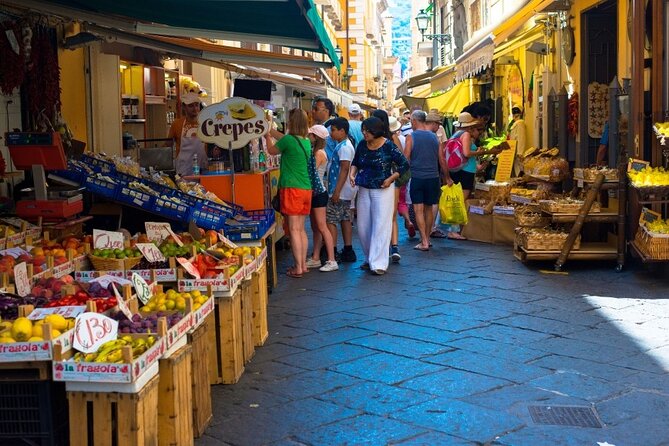
The price is $153.78 per person, for an 8 to 9 hour day. On paper, that can seem like a lot if you’re thinking only of bus ride time.
Here’s the value angle that matters:
- Air-conditioned vehicle + private transportation means you’re not managing intercity logistics on your own
- All fees and taxes are included, so you don’t get hit later with surprise costs
- Live commentary adds context you’d otherwise have to look up on your phone
- The route hits multiple “big” destinations without needing separate tickets or separate scheduling
What’s not included is also clear: lunch and tips. So yes, you’ll likely need to plan for food on your own. That’s normal for a coast-day, but it’s the main budget variable you control.
Think of this tour as buying time and simplicity. You’re trading deep exploration of one town for a broader first-timer map of the coast.
The people factor: Chiara and Mario’s impact on a tough road day
One big reason these tours feel smooth—or not—is the human part: guiding and driving.
A 5/5 experience specifically praised Chiara for being friendly and knowledgeable, and Mario for navigating the coastal roads as if it were routine. Even without getting into specifics, you should take that seriously. The Amalfi Coast roads are famously narrow and busy, and when someone knows the route, your day feels less stressful.
With live English commentary, your guide also affects how much you actually get out of the stops. You’re not just viewing; you’re learning just enough to make your photos make sense later.
Tips to enjoy the day instead of rushing it
A day like this is best when you plan for movement.
First, wear shoes that handle steps and uneven paving. Positano in particular is built on steep steps, and one wrong slip can end the fun faster than any bad weather.
Second, carry a small day bag and keep essentials close. You’ll be getting on and off the vehicle, walking between viewpoints and lanes, and you don’t want to lose time digging around.
Third, if you’re sensitive to long days, pace your expectations. You’re getting stops, not full immersion. Decide what you want most: sea views, town walking, or history/legend context—and spend your limited time accordingly.
Finally, keep an eye on weather. This experience requires good weather, and if conditions are poor, the tour may be adjusted or refunded.
Who should book this one-day Naples coast tour?
I’d book this if:
- You’re staying in Naples and want the Amalfi Coast highlights in one day
- You prefer guided context and a fixed route over independent planning
- You want a balance of walking and viewpoints without renting a car
I might skip it if:
- You’re the type who needs a long, unhurried day in one town
- You dislike tight schedules, stair-heavy towns, or long stretches in a vehicle
- You don’t want to plan your own lunch
For first-timers, it’s a strong sampler. For repeat visitors, it can still work if you want a quick refresh and a guided pass through the big names.
Should you book this one-day Amalfi Coast sampler?
If you want a practical, time-efficient day that connects Meta, Sorrento, Positano, Furore, and Amalfi into one coherent route, this is a solid pick. The inclusion of air-conditioned transportation, live English commentary, and all fees and taxes makes it easier to commit without second-guessing the budget.
Just go in with the right mindset: it’s a highlights day. Bring comfortable shoes, expect a lot of movement, and plan for lunch on your own. If you do that, you’ll come away with a clear feel for the coast and a shortlist of places you’ll want to return to for more time.
FAQ
How long is the tour?
The tour runs about 8 to 9 hours.
What does it cost?
The price is $153.78 per person.
Is the tour offered in English?
Yes, it’s offered in English with live commentary on board.
What’s included in the price?
It includes an air-conditioned vehicle, private transportation, all fees and taxes, and live commentary on board.
What’s not included?
Lunch and tips are not included.
How big is the group?
The tour has a maximum of 19 travelers, and it requires at least 4 people to run.