REVIEW · NAPLES
Pompeii, Positano & Sorrento private shore excursion
Book on Viator →Operated by Askos Tours · Bookable on Viator
Pompeii, Positano, and Sorrento without the hassle. I like that you get two hours of private guidance inside Pompeii and that your driver handles the full-day route in a modern van, so you can focus on the sights. The whole day is organized as a true private experience, just your group.
I also like how much time you get to move on foot in both Positano and Sorrento. The downtown walk in Positano and the stroll along Corso Italia make it easier to read each town’s layout, not just rush through photo stops. There’s even an option to grab a quick lunch by the sea during the Sorrento portion.
The only real catch is heat and shade. Pompeii is vast and exposed with minimal shade, so bring a hat, sunscreen, and plenty of water. On extreme hot days, you may want to pace yourself and prioritize the stops that matter most to you.
In This Review
- Key highlights worth knowing
- A single day linking Bay towns and Pompeii
- Private transport that keeps you from losing hours
- Positano on the Centro Storico walk: where the day starts
- Sorrento’s Corso Italia stroll and the Piazza Tasso feel
- Basilica di Sant’Antonino: short stop, big personality
- Entering Pompeii at Porta Marina and getting oriented fast
- Pompeii’s portico life: the Basilica area
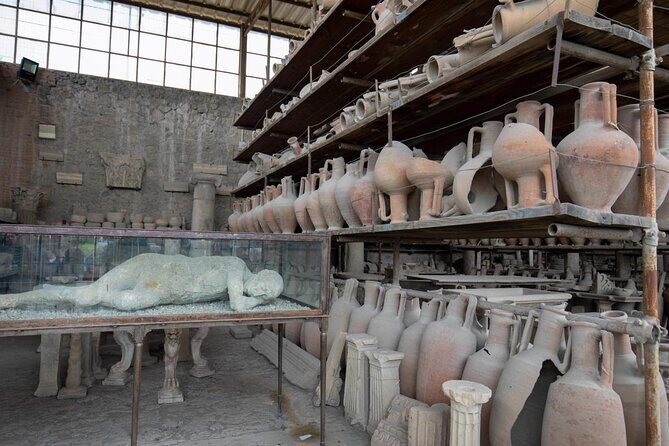
- Granai del Foro: marble tables, baths, and eerie casts
- Forum views: the ancient main square you can still feel
- Stabian Baths: the oldest thermal complex vibe
- Lupanar and the Teatro Grande: Pompeii’s contrast in one day
- House stops: Casa del Menandro and Casa del Fauno
- Heat and timing: how to survive Pompeii in summer
- Meals aren’t included, but lunch planning is part of the value
- Price and value: when $603.80 makes sense
- Who this tour is best for
- Should you book this private Pompeii, Positano & Sorrento shore day?
- FAQ
- How long is the Pompeii, Positano & Sorrento private shore excursion?
- Where can pickup happen for this tour?
- What’s included in the tour price?
- Are meals included?
- Is the tour offered in English?
- How much time do you spend in Pompeii?
- What should I bring for Pompeii?
- Can I get a full refund if I cancel?
Key highlights worth knowing
- Two hours of private Pompeii guidance so you know what you’re actually looking at.
- Door-to-door pickups across Naples, Sorrento, Salerno, and the Amalfi Coast, plus port access.
- Walking time in Positano and Sorrento with time for Corso Italia and Piazza Tasso.
- A classic Pompeii route starting at Porta Marina and hitting Forum, baths, theaters, and major homes.
- A flexible lunch option in Sorrento if you want food without derailing the schedule.
- Heat management is part of the plan since Pompeii has limited shade.
A single day linking Bay towns and Pompeii
This is the kind of day trip you do when you want maximum payoff. You’re covering three of the most famous stops on the Bay of Naples, but you’re not doing it with separate buses, self-guided chaos, and forced group shuffling.
The big advantage here is structure. Your driver moves you between towns, and once you’re in Pompeii you get focused guidance for a solid block of time. That matters, because Pompeii is not a “wander wherever” site. Even with free time, it helps to know what’s important and why.
Other Positano tours we've reviewed


Private transport that keeps you from losing hours
You’ll start with pickup that’s designed for real travel days: ports in Campania, your hotel, or other agreed meeting points. The tour is private, so you’re not waiting on other groups or squeezing into a crowded van while everyone argues about where to eat.
The transport is described as a modern minivan with a professional driver, and the route is built for a full day rather than a short half-day sprint. In practice, this kind of setup usually means you can keep the timing you want: more walking where it’s rewarding, and less wasted time in transit.
One more practical note: the tour provides a mobile ticket. That sounds small, but it reduces friction, especially on shore days when you’re also managing luggage and meeting points.
Positano on the Centro Storico walk: where the day starts
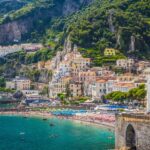
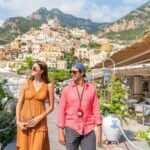
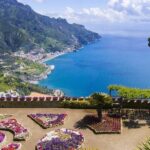
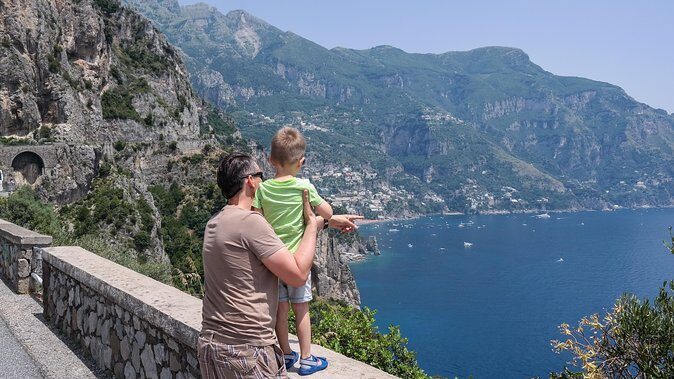
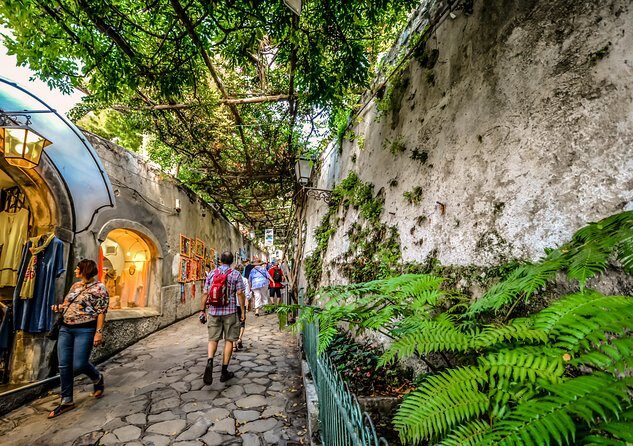
Positano is steep, pretty, and walkable in bursts. The plan starts with a downtown stroll around the Centro Storico area, timed at about two hours. That’s enough time to get your bearings, wander streets, and not feel like you’re constantly checking your watch.
What you’re really doing on this first stretch is learning the town’s rhythm. Positano doesn’t feel like a flat grid. It’s more like layers of neighborhoods stacked above the water, with views you earn as you climb and turn corners. With a planned walking window, you can follow that flow rather than treating the town like a backdrop.
Possible drawback: if your group hates steep stairs or slower walking days, you’ll need to go at a gentle pace right away. The good news is that because you’re not in a large group, you can slow down without stopping the whole experience.
Sorrento’s Corso Italia stroll and the Piazza Tasso feel
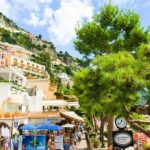
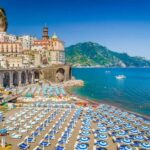
Next comes Sorrento, and the focus is on old-town walking plus the main road called Corso Italia. You’re given another about two hours here, which is the right amount of time to stroll alleys, pop into small streets off the main drag, and still arrive at key view areas without stress.
The itinerary also builds in a choice: instead of walking every minute, you can have a quick lunch in a restaurant by the sea. That matters because Sorrento is the kind of place where a meal can either become an easy pause or a time drain. Having it baked into the schedule helps keep the rest of the day on track.
You’ll also connect with Sorrento’s central “living room” energy at Piazza Tasso. The description paints it as the gathering space where the town opens out across the gorge. Even if you just sit for a bit, it’s a great place to recharge before the long Pompeii portion of the day.
Basilica di Sant’Antonino: short stop, big personality

After Sorrento, you get a quick visit to Basilica di Sant’Antonino, named after the town’s patron saint. The stop is only about 15 minutes, but it’s the kind of church that turns into a memorable detail rather than a rushed checkbox.
From the exterior, it barely reads as a church. Then inside, it shifts into a more ornate setting: Roman artefacts, dark medieval paintings, and a gilded ceiling. One detail you’ll likely remember is the oddity of two whale ribs in the lobby area by the front door.
If you’re the type who likes to collect small surprises, this is a good use of short time. If you want only major stops, it might feel like filler. For most people, it adds character without stealing the day.
Other Sorrento tours we've reviewed



Entering Pompeii at Porta Marina and getting oriented fast
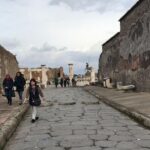
Pompeii starts the moment you enter from the main entrance called Porta Marina. You’ll have admission included, and the guide’s presence is what makes this part work. Pompeii is huge and confusing if you only follow signage and your own guesses.
Once you’re inside, the experience becomes a series of carefully chosen “what to look at” moments, each with a clear purpose. The time windows are short at each spot, but there are enough major landmarks that you’ll come away with a map in your mind, not just random photos.
Pompeii’s portico life: the Basilica area
One early stop is the Basilica, described as an open portico that sheltered merchants and other activities. This is useful because it gives you the social backbone of the city.
Instead of only looking at ruins as shells, you start to see Pompeii as a functioning urban machine: trade, movement, public business, and everyday bustle. The Basilica area helps you picture the city as it was before the eruption cut it off.
The time here is around 15 minutes, which is enough to learn the function and then move on before fatigue sets in.
Granai del Foro: marble tables, baths, and eerie casts

Then comes Granai del Foro, the granary where you can see marble tables and baths for fountains that adorned entrances of houses. This stop adds texture: Pompeii wasn’t just monumental temples. People built practical systems and decorated them too.
It also includes the heavy details. The area is described as showing casts of victims of the eruption, and there are casts also connected to a dog and a tree. This kind of stop can be emotionally intense, so keep an eye on your group’s comfort level and don’t rush through if you need a pause.
If you prefer lighter topics, this is still worth your time because it anchors what Pompeii was: a lived-in city with real people and real routines.
Forum views: the ancient main square you can still feel
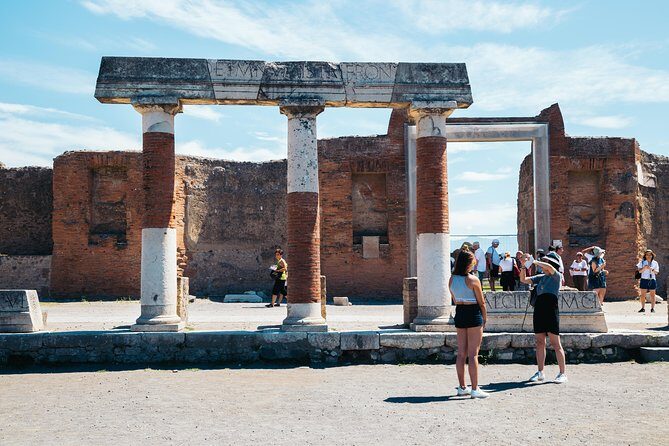
A look at the Foro de Pompeya (Pompeii’s main square) gives you a sense of scale and civic life. Even in ruins, the forum reads like a “center.” You can imagine meetings, public announcements, and how people moved through the heart of town.
This stop is about 15 minutes. For me, that’s a sweet spot for a place like this. You get enough time to locate key buildings mentally, then you’re off to the next big zone.
Stabian Baths: the oldest thermal complex vibe
Next is the Stabian Baths (Terme Stabiane), described as the oldest thermal complex in Pompeii. The site takes up a vast area between major cross streets and lanes, so you’ll feel how big the bathing culture really was.
The baths also help you understand daily life beyond homes. You get a window into how Pompeians relaxed, socialized, and handled routines that were shared across classes. Time is short here (about 15 minutes), but baths are the kind of place where you start noticing details quickly if you know what to look for.
Lupanar and the Teatro Grande: Pompeii’s contrast in one day
Pompeii doesn’t only show “grand.” It also shows what people did for entertainment and exchange.
The Lupanar is the famous brothel site in the ruined Roman city, and the stop is about 15 minutes. Even if you don’t want to dwell on the subject, it’s a part of the city’s reality. The guide’s framing is what keeps it from feeling like shock tourism and turns it into a historical reading of daily life.
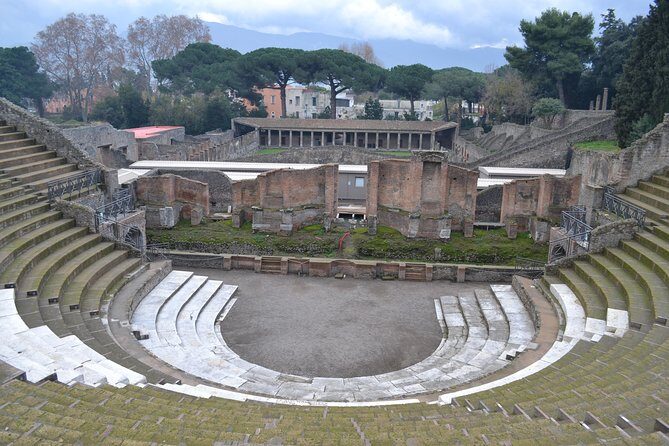
Then comes the theater pair. You’ll first get a quick look at the Teatro Piccolo, and later you’ll spend about an hour at Teatro Grande. Teatro Grande is the more important theater and it’s the best “big room” feeling in the ruins. When you stand there, you can start to picture performances and public gatherings as a centerpiece of city culture.
The longer time at Teatro Grande makes sense. It needs it. Many people rush theaters too fast on self-guided days, then miss why the space matters.
House stops: Casa del Menandro and Casa del Fauno
Two of Pompeii’s showpiece private residences are included.
- Casa del Menandro is described as one of the richest houses in Pompeii for architecture, decoration, and what it contained.
- Casa del Fauno is described as one of the largest and most impressive private residences.
These are about 15 minutes each. That’s enough time to catch the layout, notice decorative themes, and understand how wealth shows up in materials and design. The value here is not just seeing pretty rooms. It’s learning what a “home” meant in a Roman city with community space all around.
If you’re traveling with kids, house stops often work well because they’re like mini worlds. If you’re traveling with older folks or anyone sensitive to long walking days, you’ll want to keep bathroom and water breaks in mind between these stops.
Heat and timing: how to survive Pompeii in summer
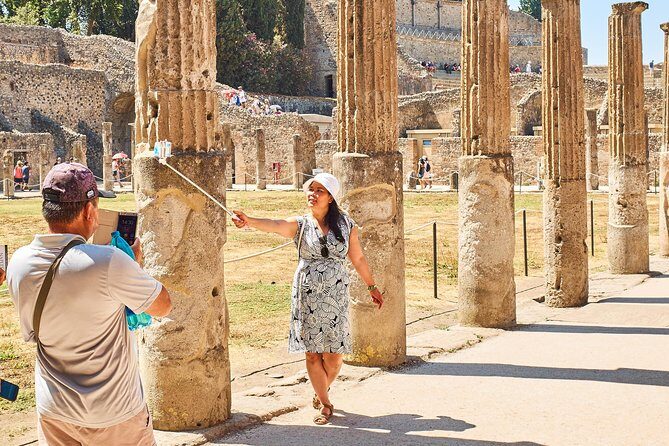
Pompeii is exposed with minimal shade, and the guidance says to use sunscreen, wear a hat, and bring plenty of water. That’s not a gentle suggestion. It’s the difference between a great day and a miserable one.
One real-world reason to take this seriously: on very hot days, even a well-planned schedule can get shortened. If you hit high temperatures, you’ll want to slow the pace, accept shorter time at stops, and focus on the areas your group cares about most, like Teatro Grande or the Forum.
My practical advice: wear shoes you can walk in for hours, even if they’re not pretty. Bring a small day bag with water and something you can grab quickly. And plan for a calmer attitude. Pompeii is a marathon, not a sprint.
Meals aren’t included, but lunch planning is part of the value
Meals aren’t included, which is normal for a private excursion. What’s helpful is that lunch is structurally allowed during the Sorrento section, with the option for a quick restaurant meal by the sea instead of continuing to walk.
This setup gives you control. You can eat early, eat late, or take the walk route. The day stays flexible without breaking the flow of the tour.
If you care about food, ask your driver for a practical spot rather than chasing a famous name. The day is timed tightly, and lunch is one of the easiest places to save 20–30 minutes.
Price and value: when $603.80 makes sense
At $603.80 per person, this is not a budget day trip. But it also isn’t just a ticket and a map.
You’re paying for:
- Full-day private transportation in a modern minivan
- A professional driver
- Two hours of private guidance in Pompeii
- Pompeii admission included
For families, it often pencils out better than you’d expect. A private arrangement means fewer coordination headaches and a calmer pace when you have kids, strollers, or anyone who needs bathroom breaks.
It also makes sense if you’re traveling for a first visit and want the “big three” in one day. You’re buying time. You’re not spending half the day figuring out where to go and how to get there.
Where the price might not fit: if your group is totally independent, loves self-guided days, and can handle logistics on your own. In that case, you could piece together transport and pay for entry separately.
Who this tour is best for
This private shore excursion fits best if you want a structured day with minimal stress.
It’s great for:
- First-timers who want Positano + Sorrento + Pompeii in one shot
- Families who need patience and adaptability during a full day
- Travelers who prefer professional guidance in Pompeii instead of trying to “figure it out” alone
- People who value door-to-port or door-to-hotel pickup
It may be less ideal for:
- Anyone who can’t handle steep walking in Positano and long exposed areas in Pompeii
- Groups that want lots of free time with no fixed stops
Should you book this private Pompeii, Positano & Sorrento shore day?
Book it if you want a confident, guided Pompeii visit paired with two iconic Bay towns, without the stress of transportation and meeting points. The combination is smart: walking time in Positano and Sorrento, then guided structure in Pompeii, plus a driver who keeps you moving.
Skip it if you’re heat-sensitive and expect to spend long hours in full sun. You can still do it, but you’ll need to pace aggressively and prioritize the biggest stops like Teatro Grande and the Forum.
If your priority is a smooth day that makes Pompeii readable, not overwhelming, this is one of the more practical ways to do it.
FAQ
How long is the Pompeii, Positano & Sorrento private shore excursion?
It’s about 8 hours.
Where can pickup happen for this tour?
Pickup is available from customers’ accommodation in Naples, Sorrento, Salerno, and the Amalfi coast, and also from any port in Campania or other meeting locations.
What’s included in the tour price?
You get two hours of private guidance in Pompeii, full-day private transportation in a modern minivan with a professional driver, and admission fee in Pompeii.
Are meals included?
No. Meals are not included, though there is an option for a quick lunch during the Sorrento portion.
Is the tour offered in English?
Yes, it’s offered in English.
How much time do you spend in Pompeii?
You enter Pompeii from Porta Marina and spend time across multiple stops, including a longer visit of about 1 hour at Teatro Grande, plus shorter segments at landmarks like the Forum, Stabian Baths, and key homes.
What should I bring for Pompeii?
Bring sunscreen, a hat, and plenty of water because Pompeii is large and exposed with minimal shade.
Can I get a full refund if I cancel?
Yes. You can cancel for free up to 24 hours in advance for a full refund.