REVIEW · NAPLES
Full Day Tour Ravello-Amalfi-Positano
Book on Viator →Operated by The Naples Tours · Bookable on Viator
First stop, big views. This full-day ride links three of the coast’s best towns—Ravello, Positano, and Amalfi—with an English-speaking driver and an air-conditioned car so you spend less time figuring things out. I especially like how the driver’s commentary helps you read what you’re seeing instead of just snapping photos.
What I really like is the pace and comfort: you get smooth transport with tolls, parking, gas, and taxes handled, so your only job is to show up and enjoy. If you’re lucky, your driver pairing includes pros like Andrea or Paolo, who are praised for friendly service, smart route choices, and adapting when conditions change.
The one caution: your time in each town is tight (about 1 hour per stop), and entrance tickets and meals aren’t included. If you want a slow, sit-down day with museums, plan on being selective.
In This Review
- Key highlights to know before you go
- Why Ravello, Amalfi, and Positano make one smart day
- Naples pickup and the car ride that actually feels worth it
- Ravello’s villa world above the clouds: Rufolo, Cimbrione, and more
- Positano’s vertical city: Santa Maria Assunta, Roman clues, and tower views
- Amalfi’s Cathedral complex and the paper museum you might not expect
- Price and value: what $360.23 covers (and what it doesn’t)
- Timing, weather, and how to avoid a frustrating day
- Who this tour fits best (and the one reason to hesitate)
- Should you book this full day Ravello–Amalfi–Positano tour?
- FAQ
- How long is the full day Ravello-Amalfi-Positano tour?
- Where does pickup happen for this tour?
- Is the driver English-speaking?
- What’s included in the price?
- What’s not included?
- What happens if weather is poor?
- Is this tour only for my group?
Key highlights to know before you go
- A driver-led day, not a museum marathon: you’re moving town to town with clear stops and practical guidance
- Ravello’s villa gardens and viewpoints: especially the famous gardens at Palazzo Rufolo and scenic stops like Villa Cimbrione
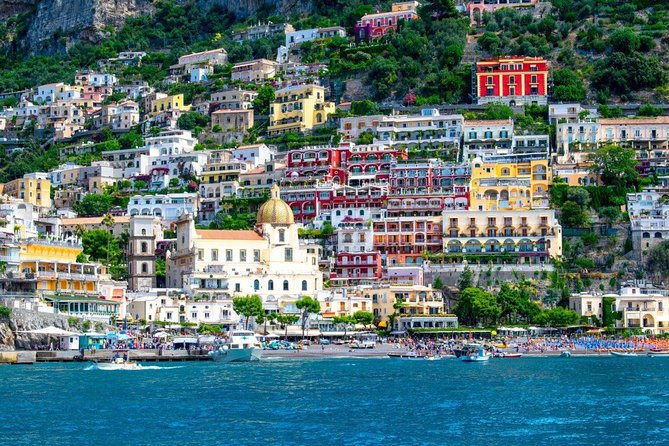
- Positano’s most iconic angles: Piazza dei Mulini down toward Santa Maria Assunta for postcard views
- Amalfi’s Cathedral complex plus paper history: Arabian-and-Sicilian style details and a paper museum using medieval techniques
- Weather-aware flexibility: when rain shows up, the plan can shift to better match the light and timing
- Private group feel: it’s set up so it’s only your group, with pickup options from common places in Naples
Why Ravello, Amalfi, and Positano make one smart day
This is the kind of coast trip that makes sense even if you’re short on time. Ravello sits up high above Amalfi, Positano drops down into the rock like a staircase made of houses, and Amalfi is the historical “maritime republic” anchor of the area. When you stitch them together in one day, you get variety without the stress of changing plans every day.
You also get a good mix of “look and learn.” Ravello gives you elevated villa culture and gardens. Positano gives you dramatic views and the feel of a town built for angles and stairs. Amalfi balances architecture with a very specific local craft story: paper-making methods that date back to medieval traditions.
The best value here is not just seeing places—it’s arriving without negotiating buses, schedules, or parking. The 8-hour structure keeps the day moving, and the driver’s English narration helps you understand what you’re passing.
If you're still narrowing it down, here are other tours in Naples we've reviewed.


Naples pickup and the car ride that actually feels worth it
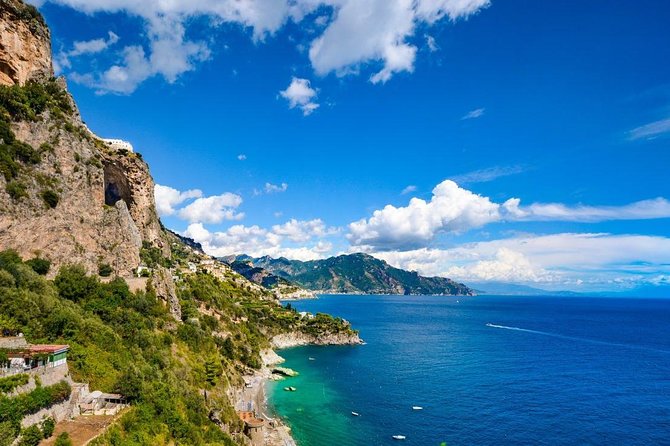
Starting in Naples is a big plus, especially if you’re staying in the city center. Pickup is offered from places like the port, airport, train station, B&Bs, private residences, and hotels. In practice, this means you don’t need to “start your day” by figuring out transport out to the coast.
Before you go, do the boring but important part: send the full address and the kind of phone number that works in Italy. If you can use WhatsApp, mention it—communication tends to run smoother when the driver can reach you quickly. You’ll also receive a mobile ticket, which helps reduce last-minute confusion.
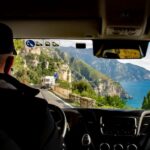
On board, you’ll have air conditioning, and the car is set up with tolls, parking, and gas already covered. That’s not a small detail. On this stretch of road, the stress usually comes from costs and logistics piling up. Here, you’re buying the “get there, on time, without drama” part.
Ravello’s villa world above the clouds: Rufolo, Cimbrione, and more
Ravello feels different the moment you’re there. It’s perched above the coast, and the town seems designed for slow strolling—alleys, small shops, and viewpoints that pull you away from your phone for a minute.
You’ll spend about 1 hour here, so think of it as a greatest-hits introduction. Ravello was founded as a refuge way back in the 5th century, and later it prospered through wool work and Mediterranean trade. Under the Maritime Republic of Amalfi and the principality of Salerno, Ravello reached its height—so a lot of what you see now connects to that long period of prestige.
What to focus on in your hour:
- Palazzo (Villa) Rufolo: this is the one people remember for the gardens. Even if you don’t go deep into every corner, the garden layout and the viewpoint energy make it worth prioritizing.
- Villa Cimbrione: when you want a “wow, that’s the coast” angle, this kind of spot is made for it.
- Villa Episcopio: built in 1944 and tied to King Vittorio Emanuele III. It’s a reminder that Ravello isn’t only medieval—its story stretches into modern times too.
- Palazzo Tolla: the town hall area, useful as a simple landmark to orient yourself while you walk.
- The Auditorium: included as a standout Ravello point of interest for a reason—it’s part of the town’s identity as a place for cultural moments.
Practical note: Ravello is charming, but it can also mean steps and uneven walking. If you have mobility limits, pack supportive shoes and move steadily. Also, admission tickets aren’t included, so decide ahead of time whether you want to pay for any of the villa interiors or garden areas versus sticking mainly to outside views and shorter stops.
If you only have a short visit, Ravello is still a strong pick. It’s the best town on this route for getting that “I can’t believe this is real” feeling from elevated scenery and classic coastal culture.
Positano’s vertical city: Santa Maria Assunta, Roman clues, and tower views

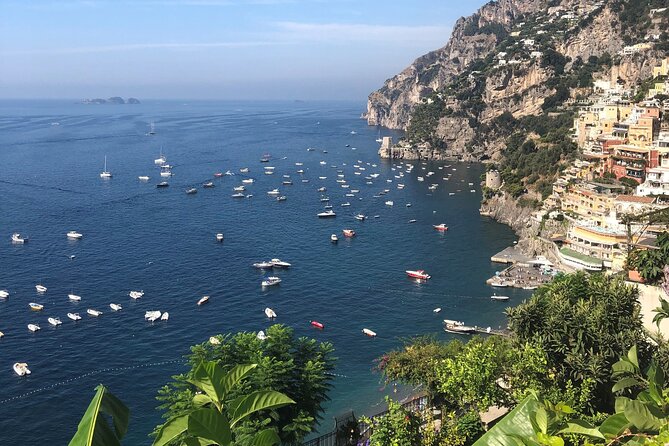
Positano is the coast at its most dramatic. The town is often described as having a vertical feel—like the sea is the one level that stays calm while everything else stacks upward. What’s interesting is that Positano isn’t a new creation based on tourism; it’s been shaped over thousands of years, with roads and access designed around the rock and the sea.
You’ll also have about 1 hour here. That’s just enough time to get oriented and see the icons, but not enough to do everything leisurely. Here’s the route logic I’d follow with your time:
Start around Piazza dei Mulini, then descend toward the beach. From there, make your way to Santa Maria Assunta, which sits close to the shoreline and offers a spectacular view. This church area is where a lot of those famous Positano photos are built from—because the setting is naturally dramatic.
Two more items that make Positano more than just scenery:
- The recently inaugurated Roman archaeological museum: it’s described as having two crypts with frescoes in an imperial-era style. If you like seeing proof that these towns sit on deep layers of time, this is a good stop.
- Watch towers along the coast: fortified during the late Middle Ages, with an oldest tower called the one of the bank (cylindrical shape) linked to the Angevin era in the 13th century. You’ll also hear about the Trasìta tower between Fornillo beach and Marina Grande, dated to the viceregal age.
Positano also comes with a big optional activity: the Path of the Gods. The walk starts from Bomerano and ends up in the upper part of Positano. With only one hour, you probably won’t do it end-to-end, but knowing it exists can help you choose a smaller segment or simply appreciate the town’s walking heritage.
One consideration: Positano’s narrow alleys and hillside layout can be physically demanding. Go in with the mindset of quick bursts—look up, snap your photo, then move. If rain shows up, expect slippery stone and adjust your pace.
Amalfi’s Cathedral complex and the paper museum you might not expect
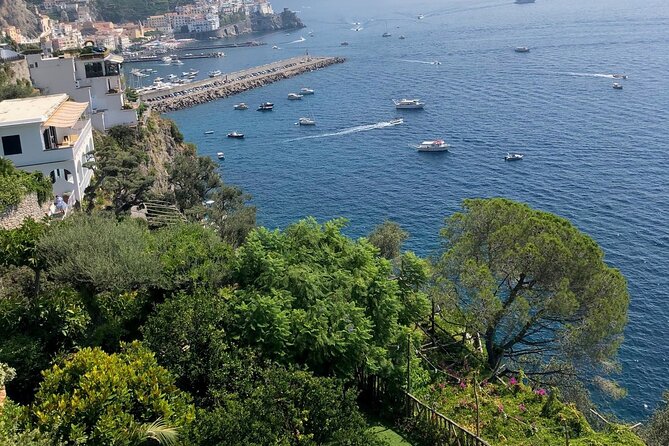
Amalfi is where your day gets historical in a specific, tangible way. The city was founded by the Romans, then became a leading maritime republic in the ninth century. It reached maximum splendor in the 11th century before later declines and conflicts. One event that’s often remembered in Amalfi’s story is the tidal wave triggered by a storm in 1343, which destroyed much of the city.
What you can do in about 1 hour is mainly a “choose your anchors” plan. Amalfi has a lot, but two stops really define the experience:
- The Cathedral of Sant ’Andrea di Amalfi
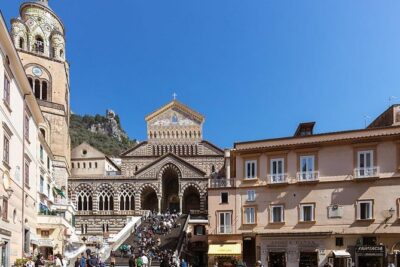
This cathedral is dedicated to the city’s patron saint and described as having Arabian and Sicilian style. The cathedral also sits alongside other churches, with overlapping structures from different eras—so it’s not one single building you walk through like a museum. It’s more like a complex, where the layers help explain why Amalfi’s culture changed over time.
- The paper museum
Amalfi is world known for high-quality paper made using medieval techniques. That doesn’t just sound like a fun fact—it gives you a lens for understanding the town’s craft economy. If you’ve ever wondered how a “small place” could have outsized influence, this is the kind of detail that answers that.
If you want one extra cultural note: Amalfi rowers participate each year in a traditional regatta of the ancient maritime republics, competing against Venice, Pisa, and Genoa. Even if you won’t see the event itself, it adds meaning to the maritime story you’re hearing.
As with the other towns, entrance tickets are not included. For Amalfi, decide if your hour is better spent on the cathedral area, the paper museum, or a mix. If you love crafts and local technique stories, the paper museum is an unusually good use of limited time.



Price and value: what $360.23 covers (and what it doesn’t)
At $360.23 per person, this is not a cheap day—but it’s also not “paying for nothing.” You’re paying for a full-day coast experience from Naples with:
- Air conditioning on board
- An English-speaking driver
- Tolls and parking
- Gasoline and taxes
That bundle matters here because the Amalfi Coast can burn time and money fast if you’re driving yourself or juggling multiple transfers. The cost is effectively buying you simplicity: you focus on photos, viewpoints, and short walks instead of handling the stressful parts.
What you should budget separately:
- Entrance tickets
- An authorized guide (so you’re getting driving plus narration, but not a separate licensed guiding service for museum-level interpretation)
- Meals and drinks
- Gratuities, optional but appreciated
If you’re the kind of traveler who wants to spend more time in museums, or you’re traveling with people who prefer longer sit-down breaks, this price may feel high. But if you want a smooth coast “best of” day with minimal friction, it’s a fair trade.
My practical take: treat this as a transport-and-guidance day with great stops, not a deep dive into interiors everywhere. You’ll enjoy it most if you go in ready to prioritize.
Timing, weather, and how to avoid a frustrating day
This experience runs about 8 hours total, and the stops are structured so you’re in each town long enough to get a feel for it and hit the key sights. That’s a good thing if you’re seeing Amalfi for the first time. It’s a compromise if you want to slow down and do everything.
Weather is also a real factor. The tour requires good weather, and if it gets canceled due to poor conditions, you’ll be offered a different date or a full refund.
Here’s the part that can save your day: the driver can adapt if rain comes through. In past trips, the driver was proactive, shifting timing so the group could get lunch while waiting for better light. That doesn’t eliminate weather challenges, but it does mean you’re less likely to feel stuck.
Your best prep:
- Wear comfortable shoes with good grip.
- Bring a light layer even in warmer months—coastal weather can swing.
- Keep expectations realistic: one hour per town is a sprint.
If you can match your plans to the day’s conditions, this becomes the kind of trip you’ll remember for the right reasons: viewpoints, iconic churches, and the craft story of Amalfi.
Who this tour fits best (and the one reason to hesitate)
This tour fits best if you want:
- A first-timer friendly coast day that covers the big three: Ravello, Positano, Amalfi
- Comfortable transport with an English-speaking driver
- A plan that keeps moving so you don’t waste your vacation day waiting around
It also makes sense if you’re traveling with mixed interests. Ravello leans scenic and villa-focused. Positano is visual and coastal. Amalfi adds architecture and the paper craft story. One day, three different moods.
The hesitation reason is simple: limited time. About an hour per town means you’ll need to choose what you value most—views, museums, or deeper wandering. If you’re a “slow streets, long lunch, and full museum time” traveler, you may feel rushed.
Should you book this full day Ravello–Amalfi–Positano tour?
I’d book it if you want a smooth, well-paced Amalfi Coast sampler from Naples, with a driver-led experience and transport details handled for you. The combination of Ravello’s villa gardens, Positano’s most photogenic church-and-sea setup, and Amalfi’s cathedral complex plus paper-making history is a strong use of an 8-hour day.
I’d skip or look for a different format if:
- You’re hoping for long museum time in every town
- You want a full authorized guide for each stop rather than narration from the driver
- You know you get stressed by tight schedules
If you’re flexible on entrances and you’re ready to prioritize the best views and one standout stop per town, this day tour is a solid value for the experience you’re getting.
FAQ
How long is the full day Ravello-Amalfi-Positano tour?
It runs about 8 hours, with about 1 hour allocated to each stop (Ravello, Positano, and Amalfi).
Where does pickup happen for this tour?
Pickup is offered from the port, airport, train station, B&Bs, private residences, and hotels. You’ll need to provide complete address details where applicable.
Is the driver English-speaking?
Yes. The driver speaks English, and the tour is offered in English.
What’s included in the price?
Included are air conditioning on board, an English-speaking driver, tolls and parking, and gasoline and taxes.
What’s not included?
Entrance tickets, an authorized guide, meals and drinks, and gratuities (optional, but appreciated).
What happens if weather is poor?
This experience requires good weather. If it’s canceled due to poor weather, you’ll be offered a different date or a full refund.
Is this tour only for my group?
Yes. It’s a private tour/activity, meaning only your group will participate. Service animals are allowed, and most travelers can participate.